 Request a Site Survey
1GC is a commercial fiber optic contractor. We build fiber backbones inside commercial buildings, connect separate structures across a campus, and handle the building entrance and fiber demarc extension for a dedicated internet circuit. Our crew can build the underground pathway, pull the cable, splice and terminate the strands, and test the finished link.
Building-to-building fiber at Gateway Pines
At Gateway Pines in Pleasant Grove, Utah, 1GC ran and terminated thousands of feet of OS2 single-mode fiber. The job connected two buildings and brought fiber to the network closet in every tenant suite. Roughly 700 feet of corrugated innerduct protected the cable along the route. That measurement describes the tubing. The fiber runs continued beyond it to the individual suites.
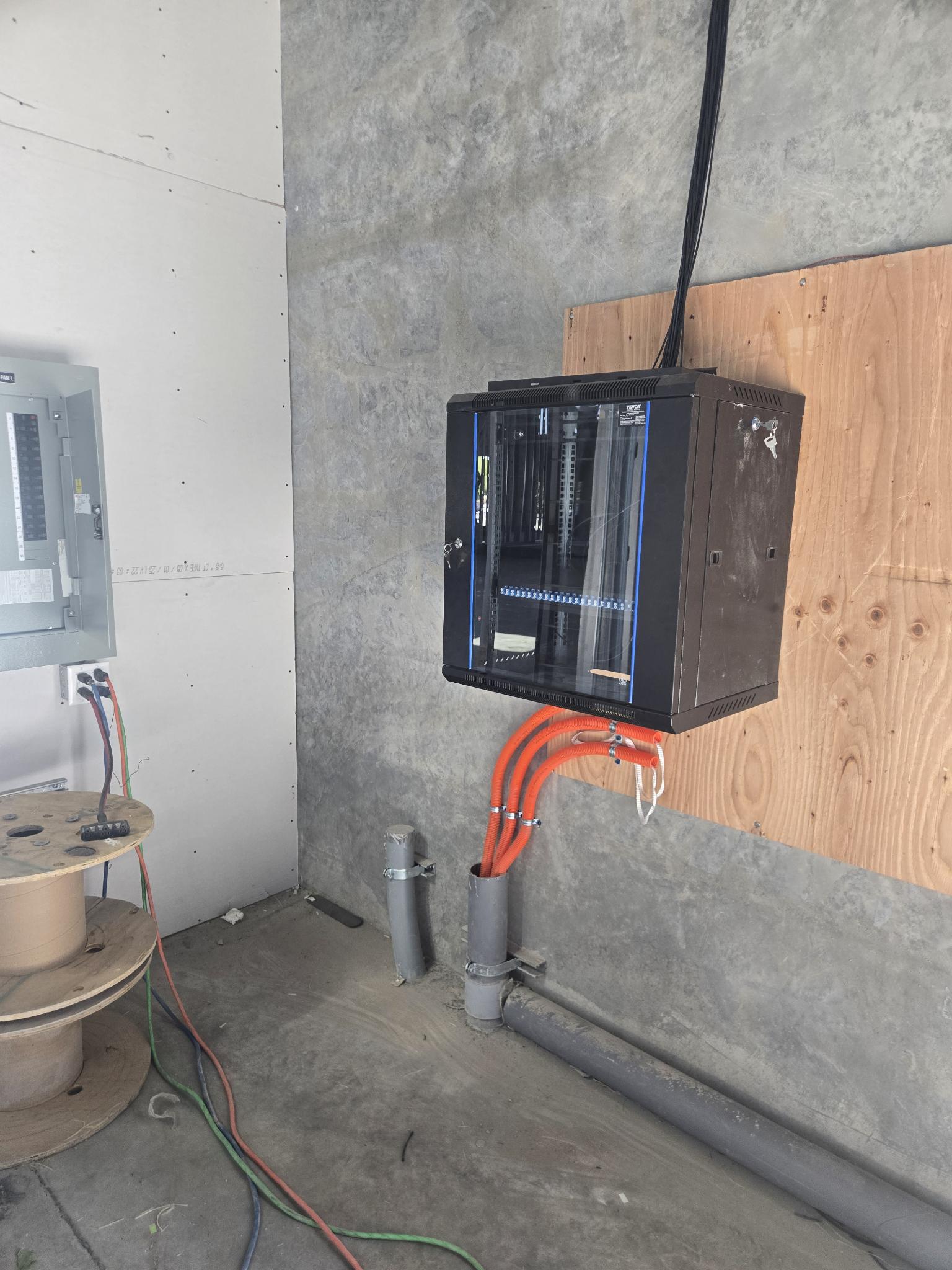
The crew brought the route through a handhole, up the building wall and into two equipment racks. Across two panels we installed approximately 36 LC connectors. When a tenant orders service, the carrier can install equipment at the rack and patch into the strands serving that suite. Follow the Gateway Pines installation from the handhole to the patch panels.
A 25-gigabit fiber backbone at Davis Conference Center
At Davis Conference Center in Layton, some network closets were connected by older OM1 multimode fiber links limited to 1 gigabit per second. 1GC installed an OS2 single-mode fiber backbone between the closets. The center now runs 25-gigabit transceivers on that backbone, with room for higher speeds as it upgrades the equipment at each end.
That distinction matters on a conference floor. Many access points can feed traffic into the same closet. The link back to the main equipment room has to carry their combined traffic. See how the wireless installation and the fiber upgrade fit together at Davis.
Planning a commercial fiber installation
We start by locating both ends of the link. In an existing facility, that may mean walking from the main distribution frame (MDF) to an intermediate distribution frame (IDF) on another floor. For a campus fiber network, we also look at building entrances, existing ducts, access boxes and the surfaces that will need restoration. Our excavation and conduit crew can include earthwork, trenching, underground conduit, handholes, backfill and surface restoration in the fiber scope. At Gateway Pines, that work gave the owner an accessible pathway for future cable pulls. A line between two racks on a plan can run considerably farther once it follows the usable pathway.
Next we identify the speed needed today, the optics at either end, the number of connections and the spare strands an owner wants for expansion. If the building has active tenants, we plan access and the switch to the new backbone around the connections that must stay in service. Where desks and access points also need Ethernet wiring, our structured cabling team can plan those copper runs alongside the fiber.
Fiber splicing, termination and testing
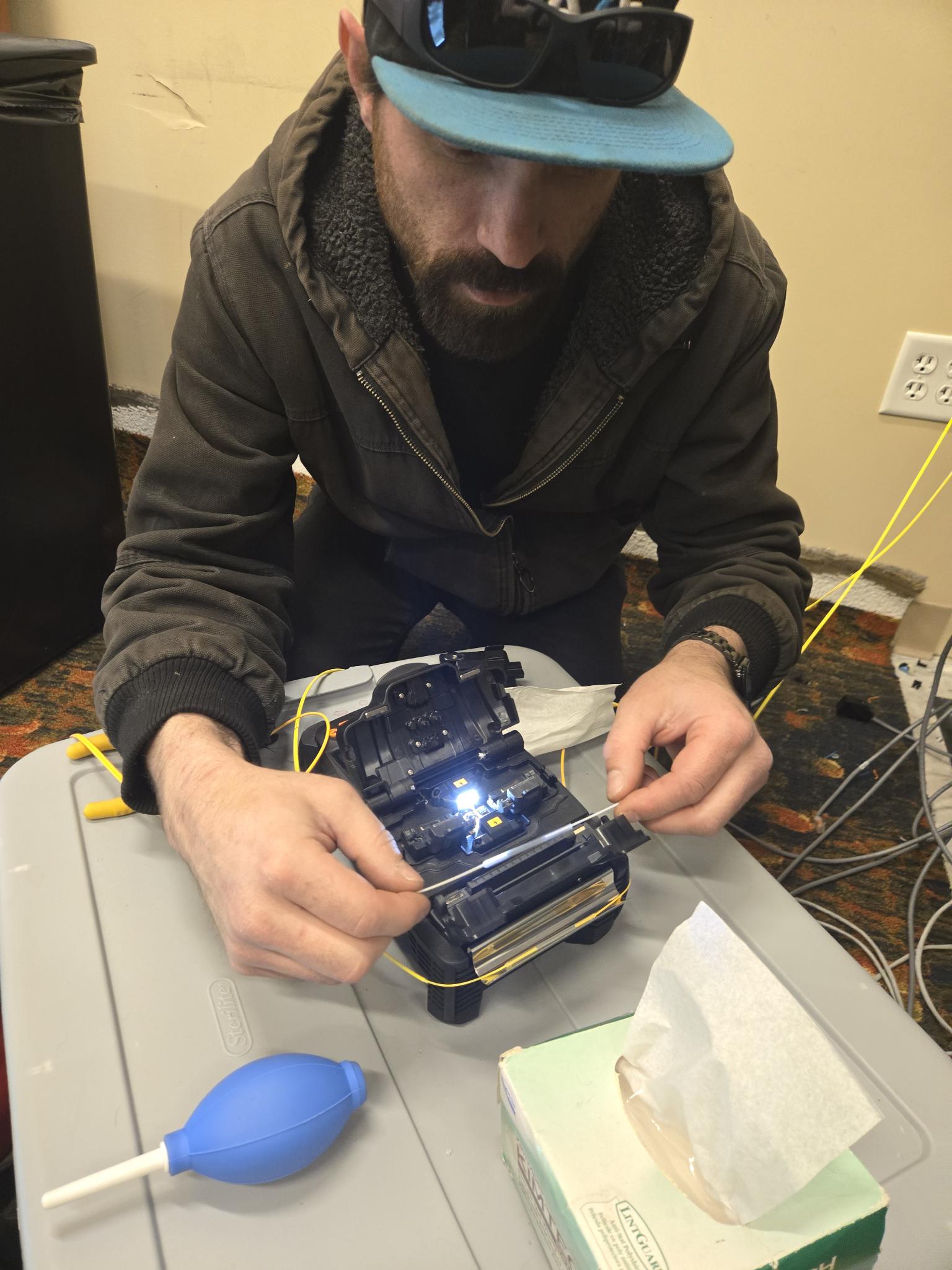
Fusion splicing joins individual glass strands. Fiber termination gives a technician a connector to patch at a panel or outlet. On a building backbone, the enclosure and splice tray protect the joins while the panel presents the connections the facilities team will use. A port identifier that matches the remote room or suite makes the next service call easier.
For fiber optic testing, agree on what the owner needs to accept the link. Confirming which strand reaches which port, measuring end-to-end loss, and finding the distance to a fault answer different questions. If your specification calls for an OTDR trace or a particular loss-test report, include the requirement with the plans so it can be priced. At Sandy, our crew terminated and tested the OS2 fiber as part of a larger Cat 6 installation. See the Sandy fiber installation and testing work.
Extending fiber from the carrier handoff
A provider may deliver a circuit at the building entrance while the customer’s switch or router sits across a warehouse. A fiber demarc extension connects those two locations. In West Valley City, 1GC extended a warehouse circuit from the handoff to the equipment it served. At Sugarplum Townhouses in Alta, the work included conduit and a fiber outlet connecting a unit to the property’s existing fiber. The endpoint and the way the space is used determine the installation.
Request a fiber installation estimate
Send the site address, the buildings or rooms you need connected, the desired link speed and any drawings or photos of the racks. For a backbone upgrade, details about the existing fiber and transceivers help us identify what can stay in service. For an outdoor run, show the proposed entrances and any known conduit. If the route is still uncertain, we can walk it with you.
Request a fiber installation estimate or schedule a site survey with 1GC.