Rebuilding Wi-Fi and the Fiber Backbone at Davis Conference Center

At Davis Conference Center in Layton, Utah, replacing the aging Ruckus Wi-Fi system meant following each connection back from the conference floor. A new access point needed a cable to a network closet. Each closet needed a fast path back to the core. 1GC handled that entire path, from pulling fiber and copper cable to configuring the switches, routers, and wireless network.

Connecting the network closets

We ran OS2 single-mode fiber between the network closets and the core, giving the venue a backbone with 25-gigabit uplinks. The fiber also gives Davis room to increase capacity in the future as equipment and traffic needs change. From the closets, our crew pulled new Cat 6A runs to serve the wireless installation.
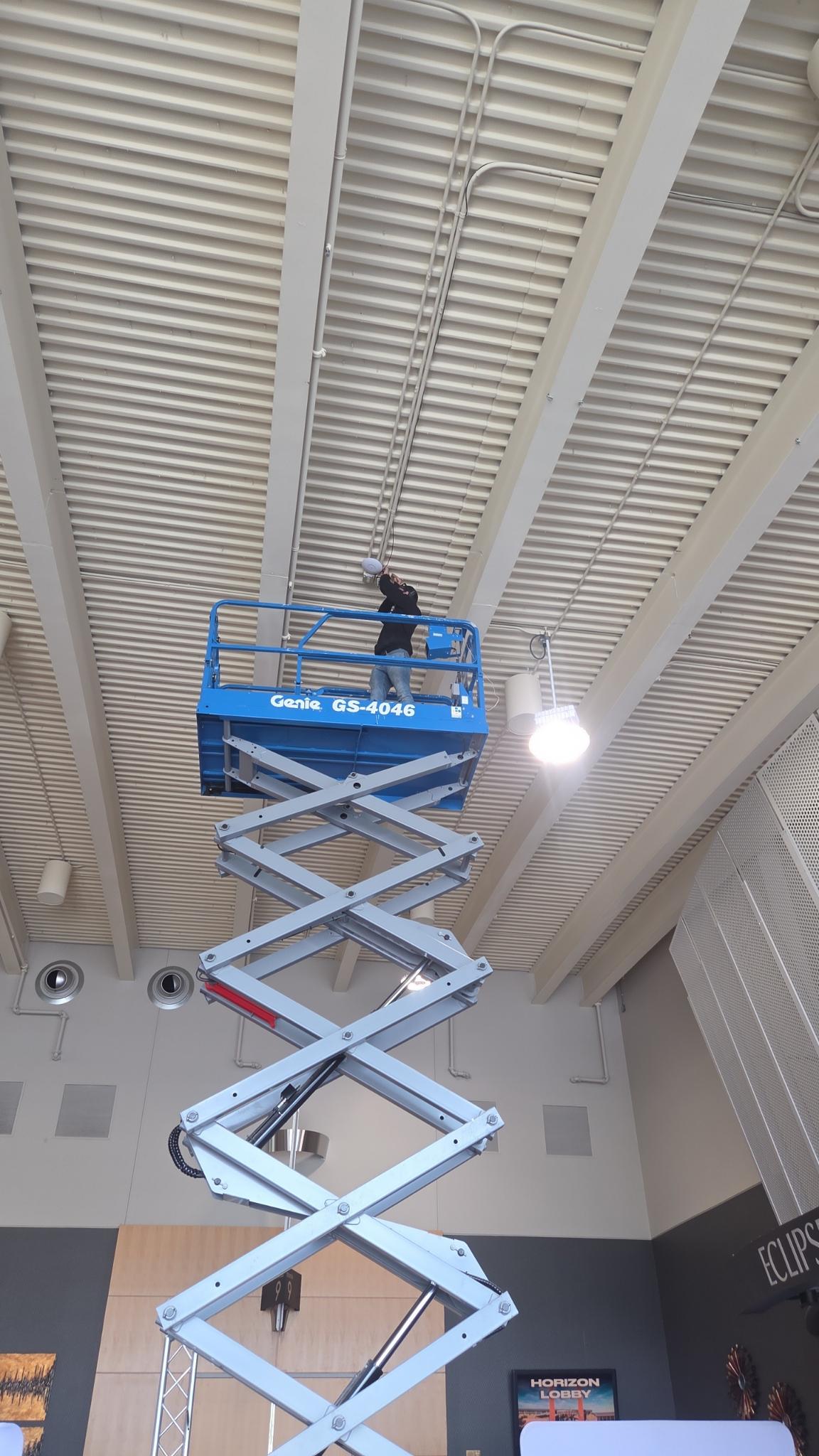
1GC technician working on overhead cabling from a scissor lift
Running overhead cabling at Davis Conference Center in Layton.

Putting 45 access points into service

Our crew installed 45 access points and replaced the venue’s switches and routers. We configured VLANs to keep different types of network traffic separate while sharing the same physical infrastructure. At the routing layer, we configured redundant 10-gigabit routers for failover so a second router can take over if the primary router goes offline.
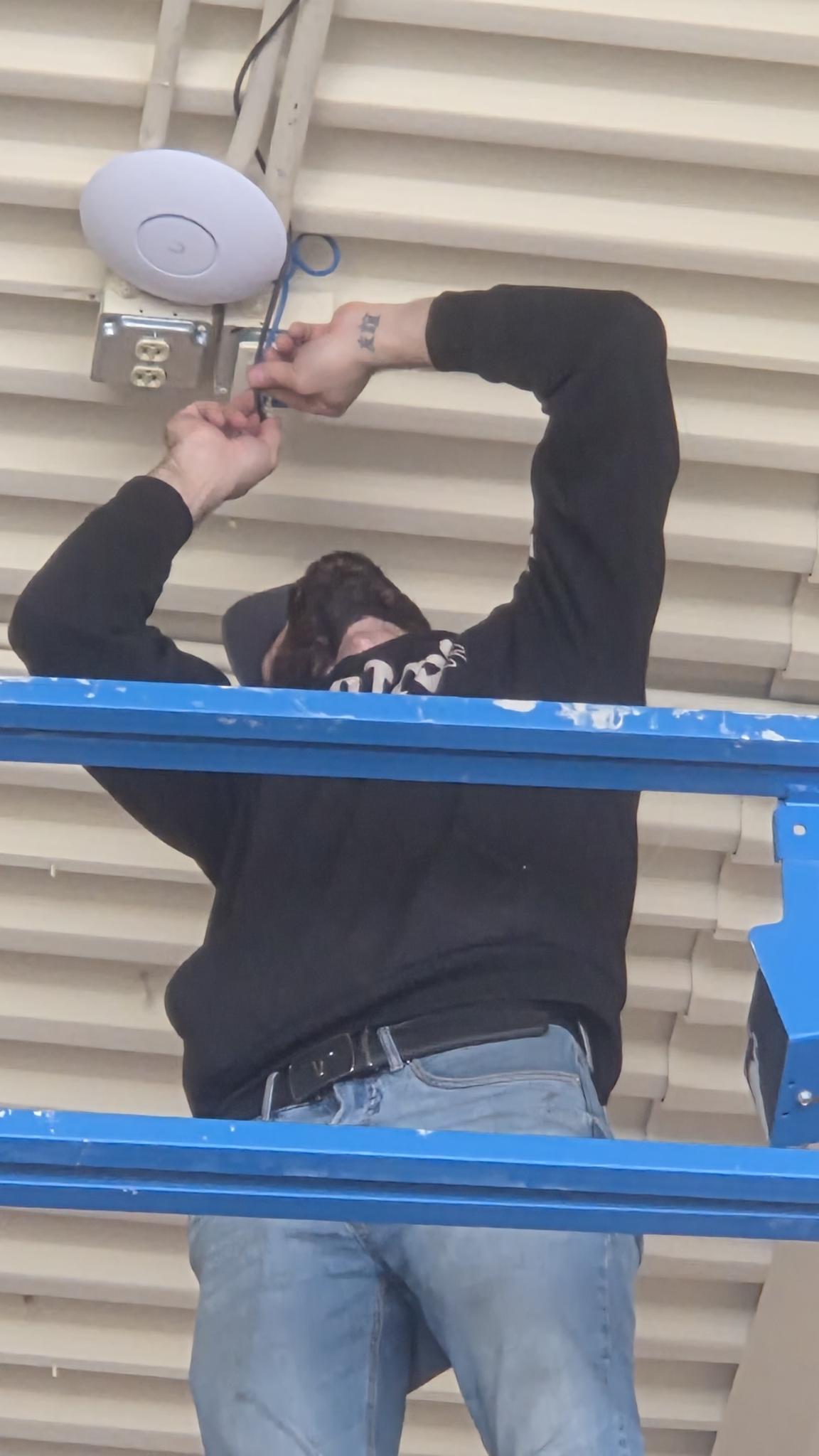
1GC crew installing a Wi-Fi access point at Davis Conference Center
Installing one of the venue’s 45 wireless access points.

A second fiber handoff to UTOPIA

The conference center also needed redundancy where the carrier hands off service to the building. Davis has two fiber uplinks to UTOPIA. 1GC managed the installation of one of those links so the venue could connect through a second handoff instead of depending on a single demarcation point.

Working with the venue beyond the installation

We worked directly with Davis Conference Center staff to address questions and resolve issues that came up during the changeover. The work extended beyond connectivity: we also set up a new cloud server where the conference center could store its data.

For a venue planning a similar upgrade, the network closet is a useful place to start a site survey. The cable serving an access point, the uplink serving its closet, and the routers serving the building each play a different role when a conference fills the rooms.
Bringing fiber to the wall jack at Sugarplum Townhouses in Alta

Salt Lake City and Wasatch Front services

At Sugarplum Townhouses in Alta, Utah, 1GC installed conduit and fiber cabling for a multi-tenant unit (MTU) link to the property’s existing fiber. The finished wall jack is the part a resident or technician sees indoors. Outside, the work followed the concrete wall beside a steel stair and landing.

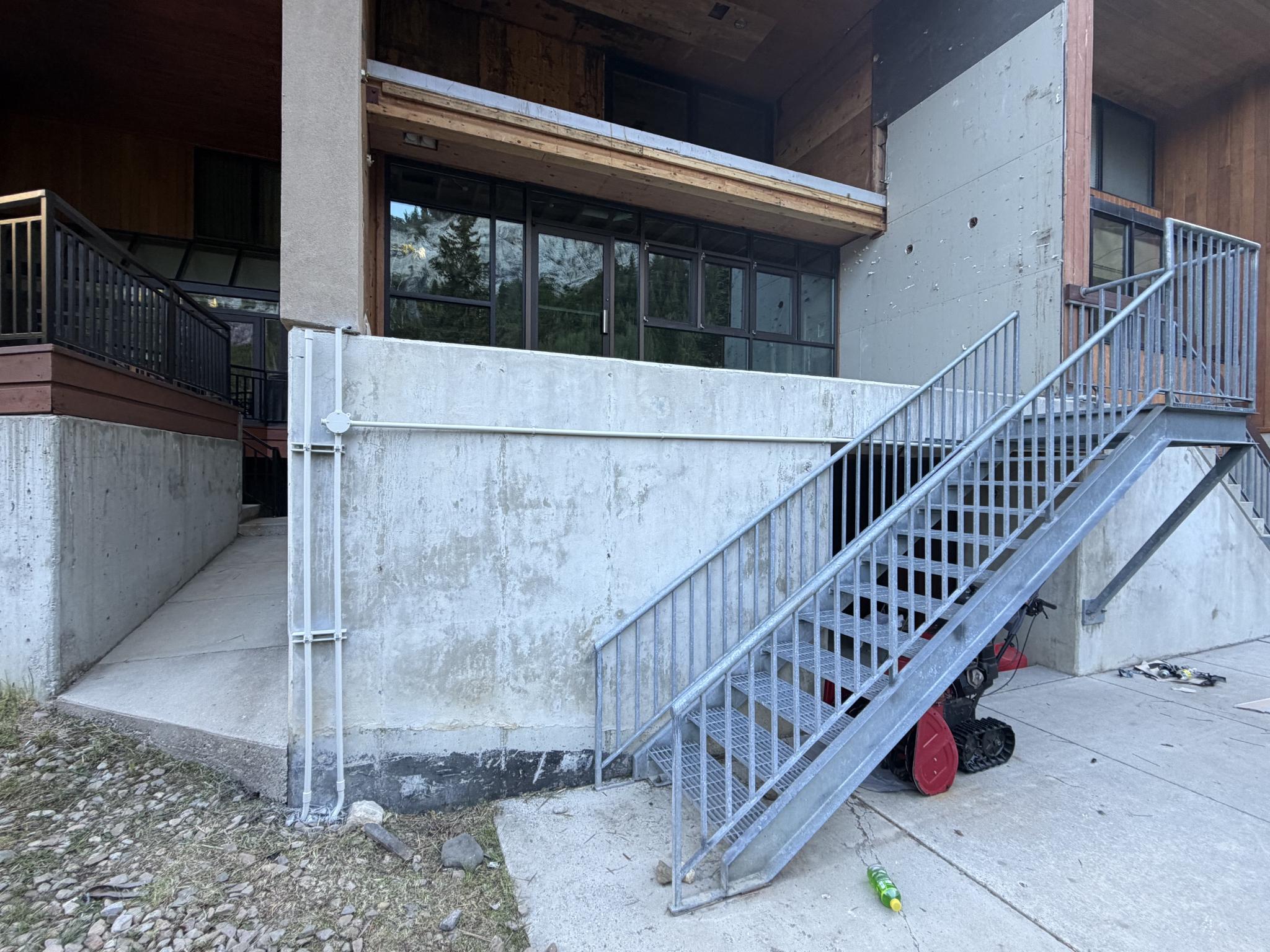
Finished conduit runs along the concrete wall beside an exterior staircase at Sugarplum Townhouses
The finished exterior pathway in Alta, seen from the foot of the stairs.

Building the exterior pathway

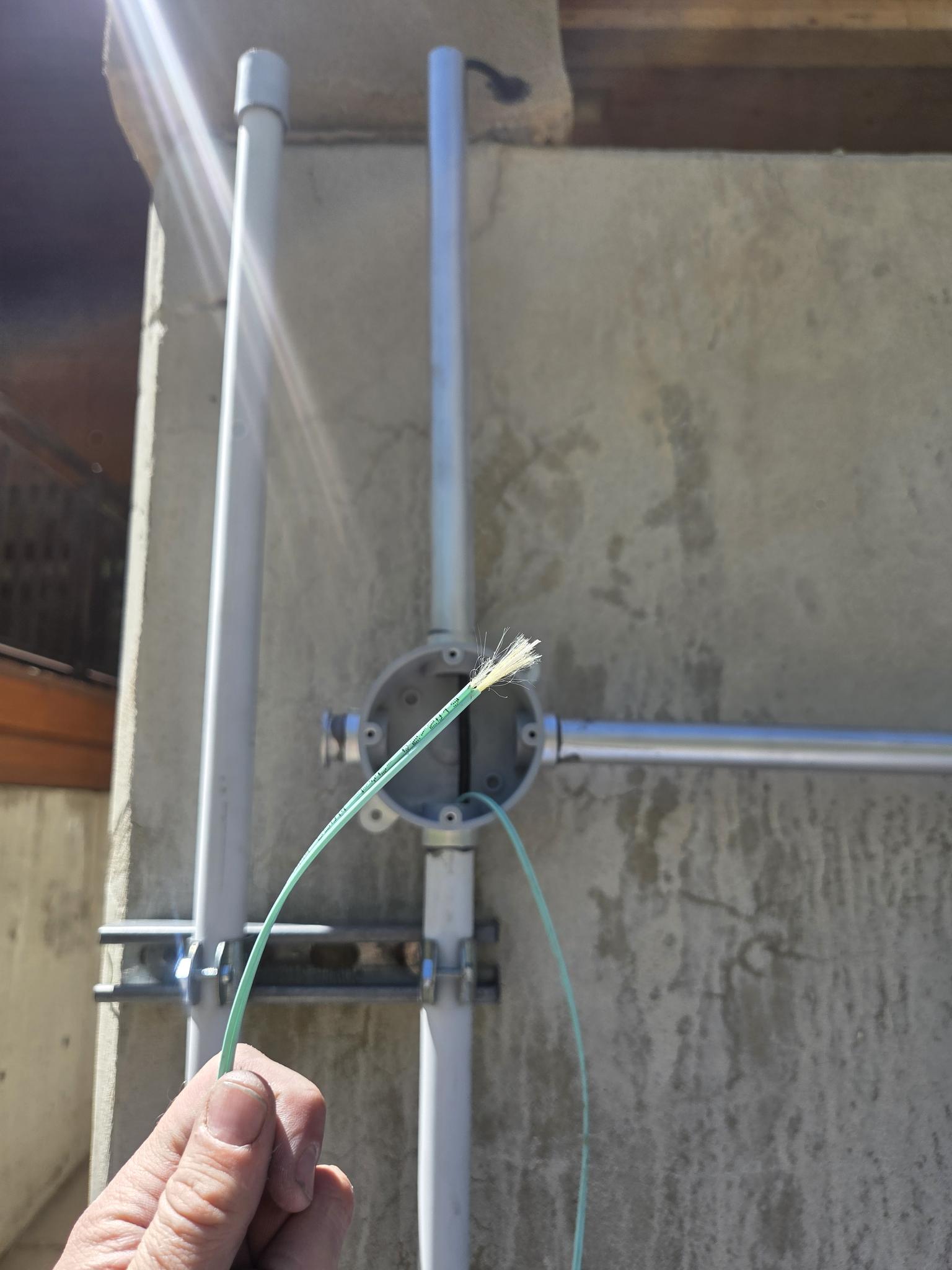
The wide view shows where the route fits against the building. During installation, the open junction box gave the crew access to the cable where the horizontal conduit met the vertical run. Once the run was closed, the conduit and fittings protected the cable along the exposed wall.

Installer handling cable at an open round junction box beside the conduit risers
Routing cable at the open junction box.
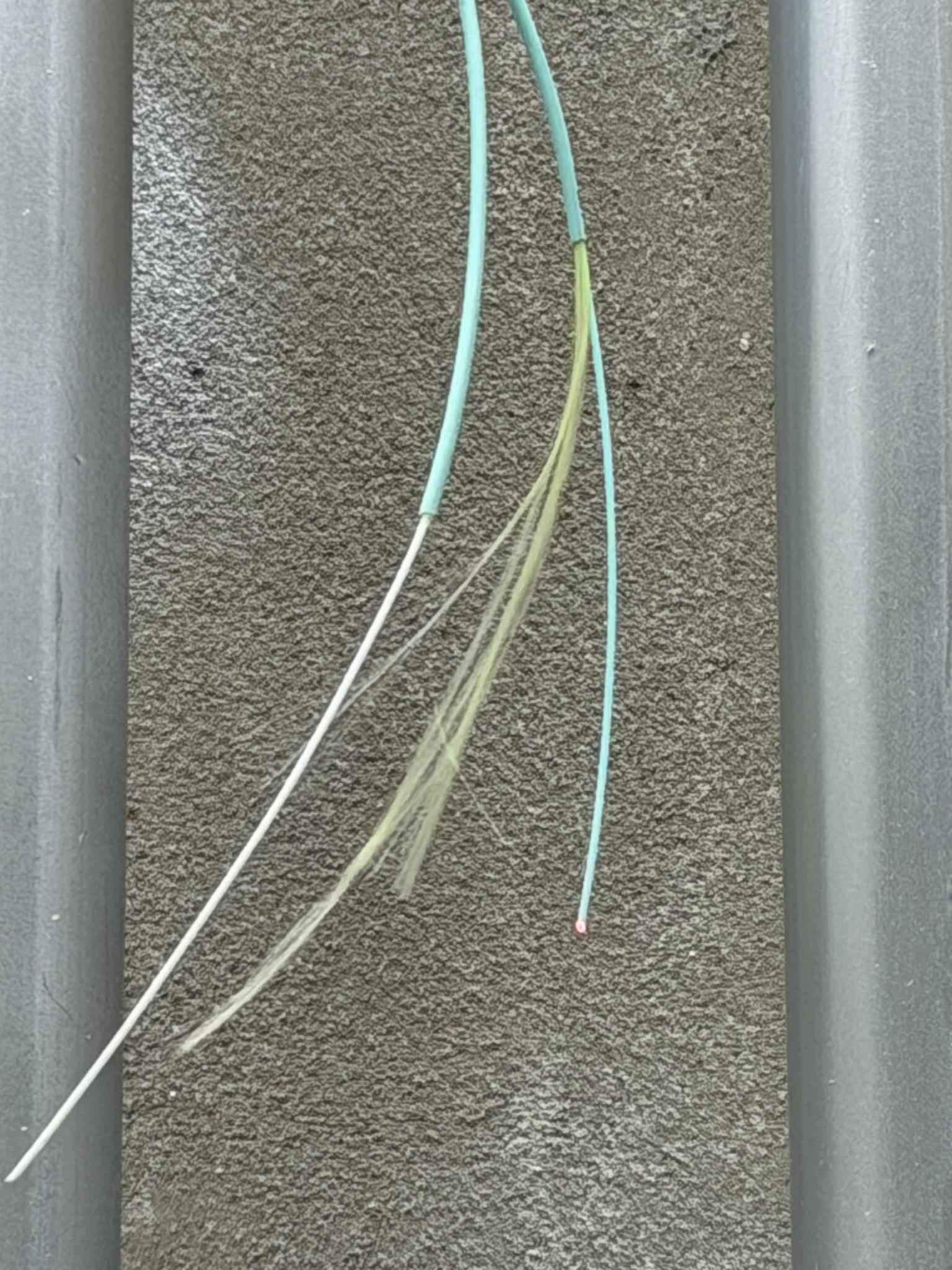
Exposed end of the fiber cable beside metal conduit during preparation
The cable during preparation for termination.

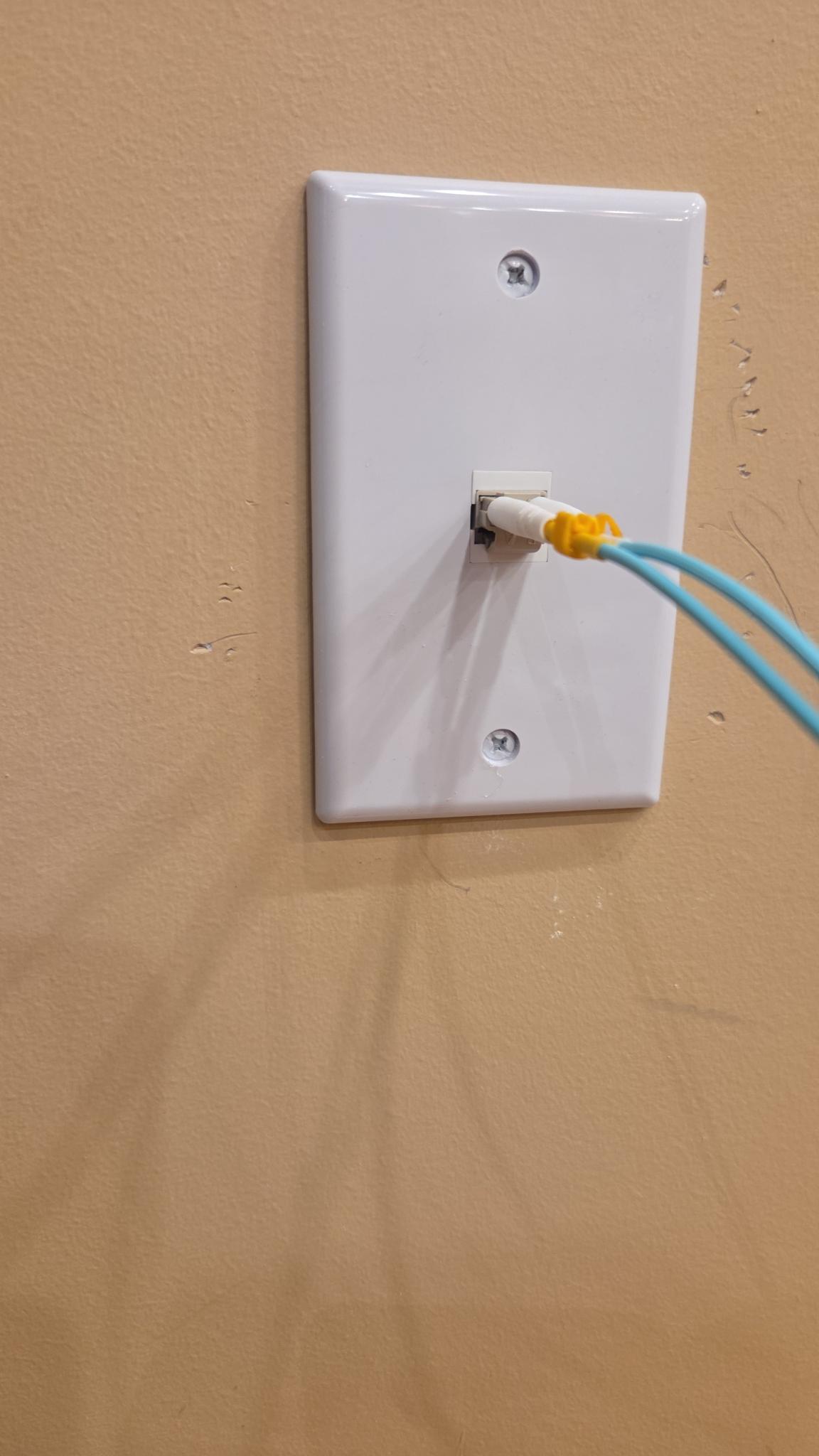
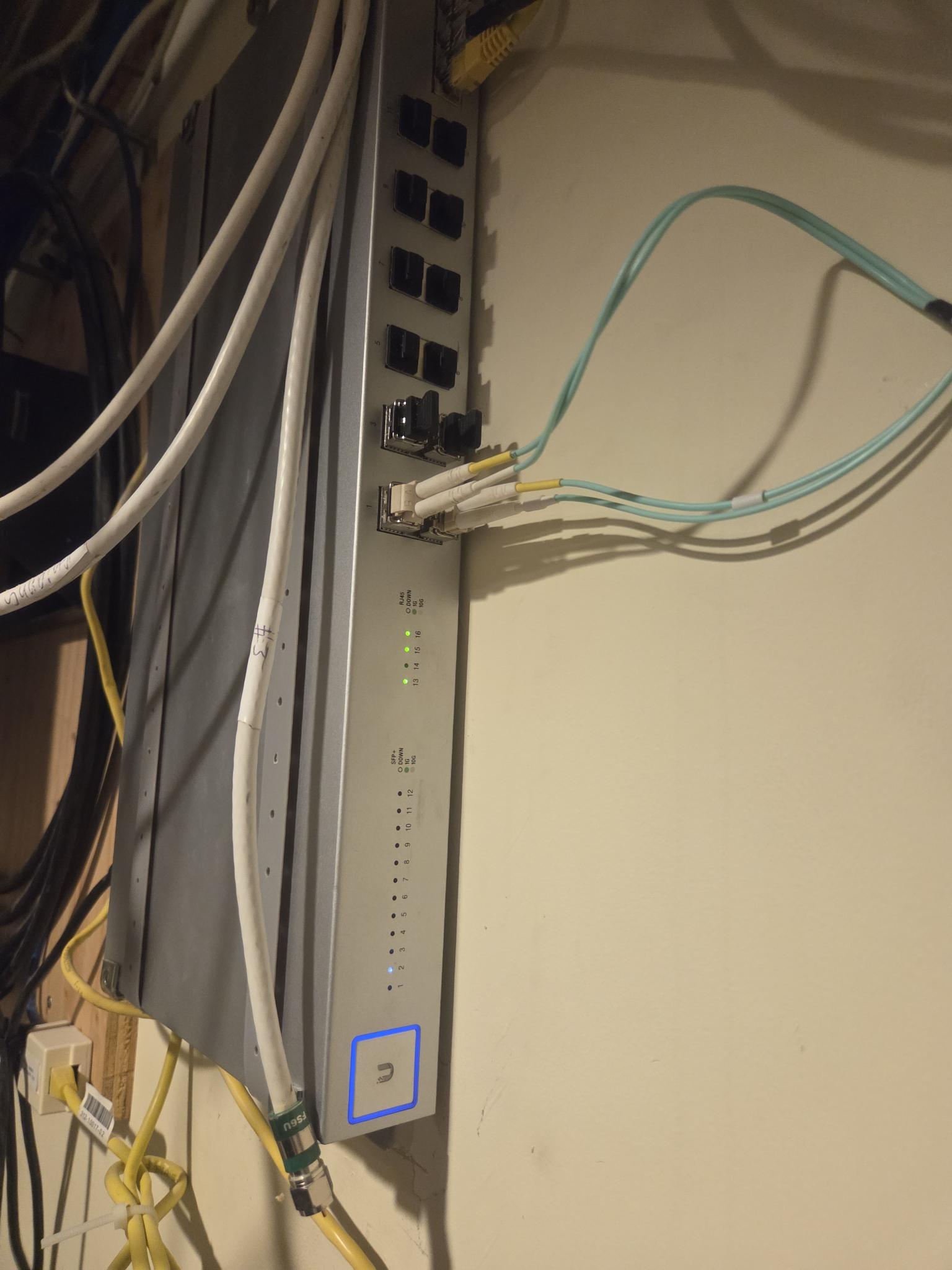
The finished fiber jack and demarcation router

Inside, the fiber terminates at a wall plate that accepts a patch lead. The demarcation router is the network equipment at the handoff. Together, the photos show the difference between the installed building cabling, the replaceable patch lead and the equipment the link serves.

Fiber patch lead plugged into the finished white wall jack
The finished fiber jack.
Demarcation router with fiber patch leads connected
The demarcation router at the property.

Planning a fiber link for a multi-tenant property?

Start with three points on the plan: the existing fiber handoff, the proposed jack location and the pathway between them. A photo of the equipment room and a view of the exterior route help us assess where new conduit may be needed.

Request a site survey

12 cameras and a fiber demarc extension for a Salt Lake City warehouse

At this Salt Lake City warehouse, 1GC installed twelve cameras, ran structured cabling, extended the carrier’s fiber handoff and installed a network rack with Cisco hardware. The work took the crew from a lift outside the loading door to the equipment rack inside.

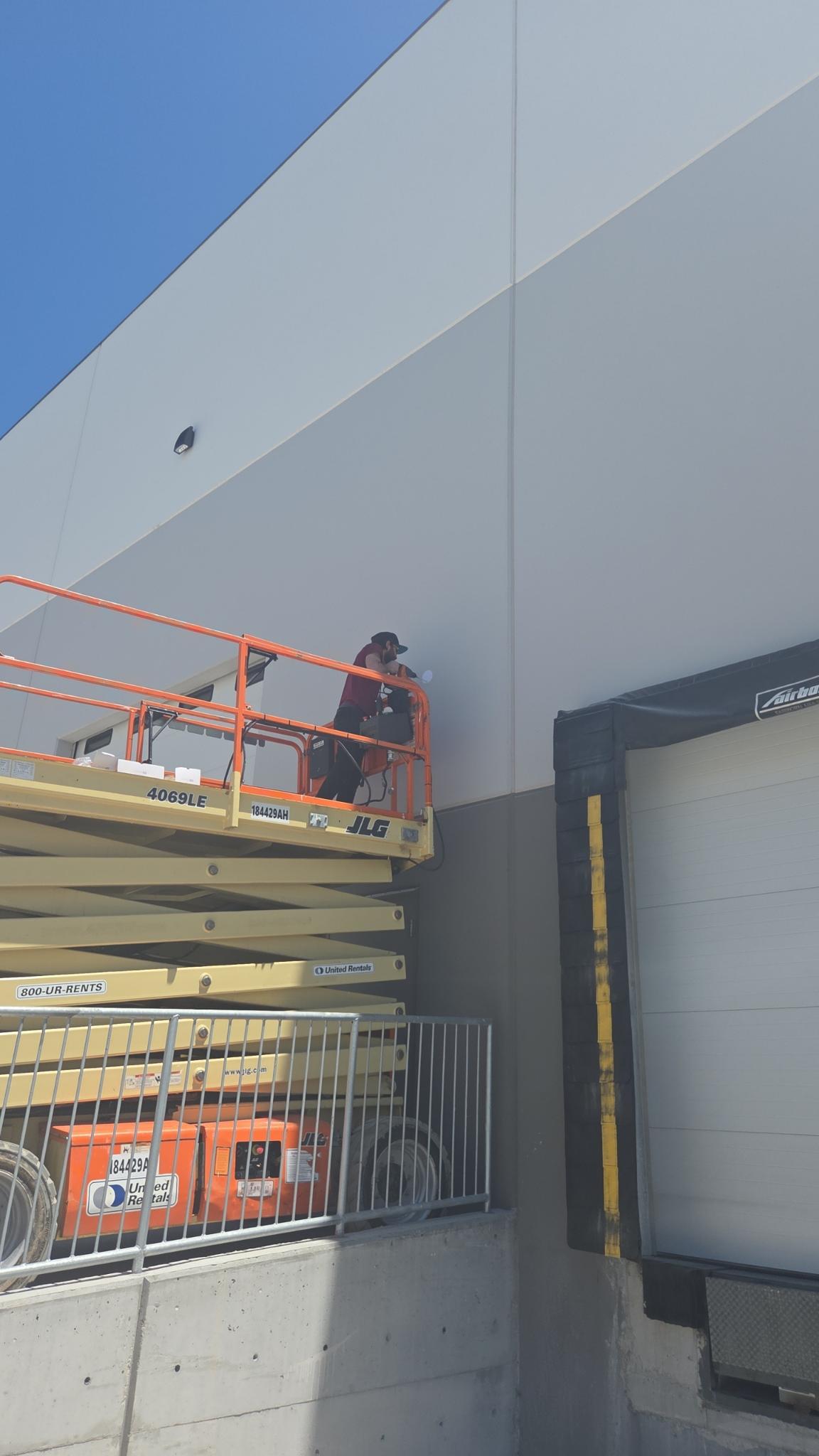
Exterior lift work beside the warehouse loading door

Reaching the camera locations

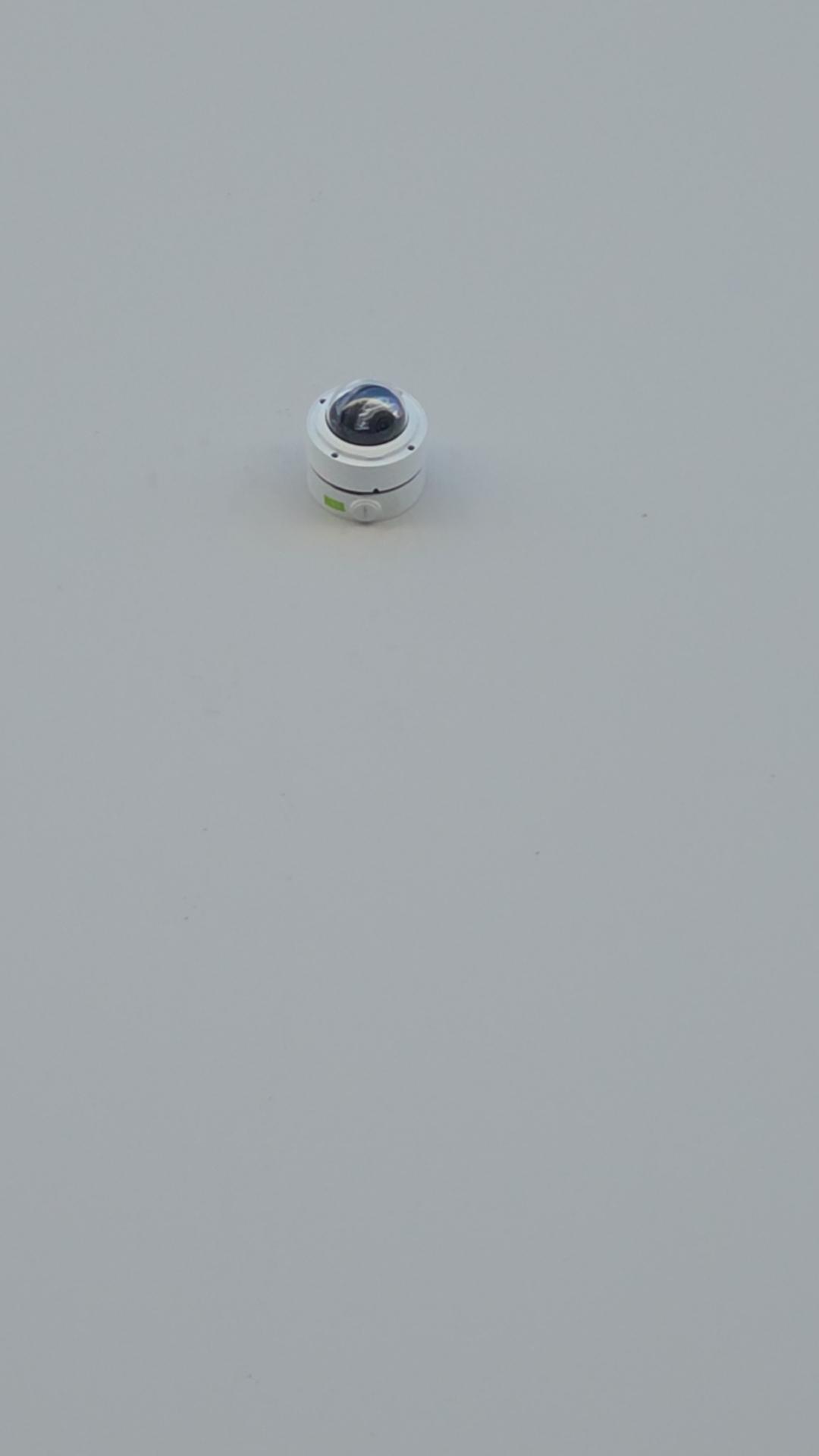
Our installers used lifts to reach elevated mounting locations. The installation included cameras on interior steelwork and on the exterior wall. The wide view shows the height of the work area. The close-up shows one of the twelve cameras after installation.

Finished exterior camera
A 1GC technician works from a scissor lift at the warehouse exterior.

Extending the fiber handoff

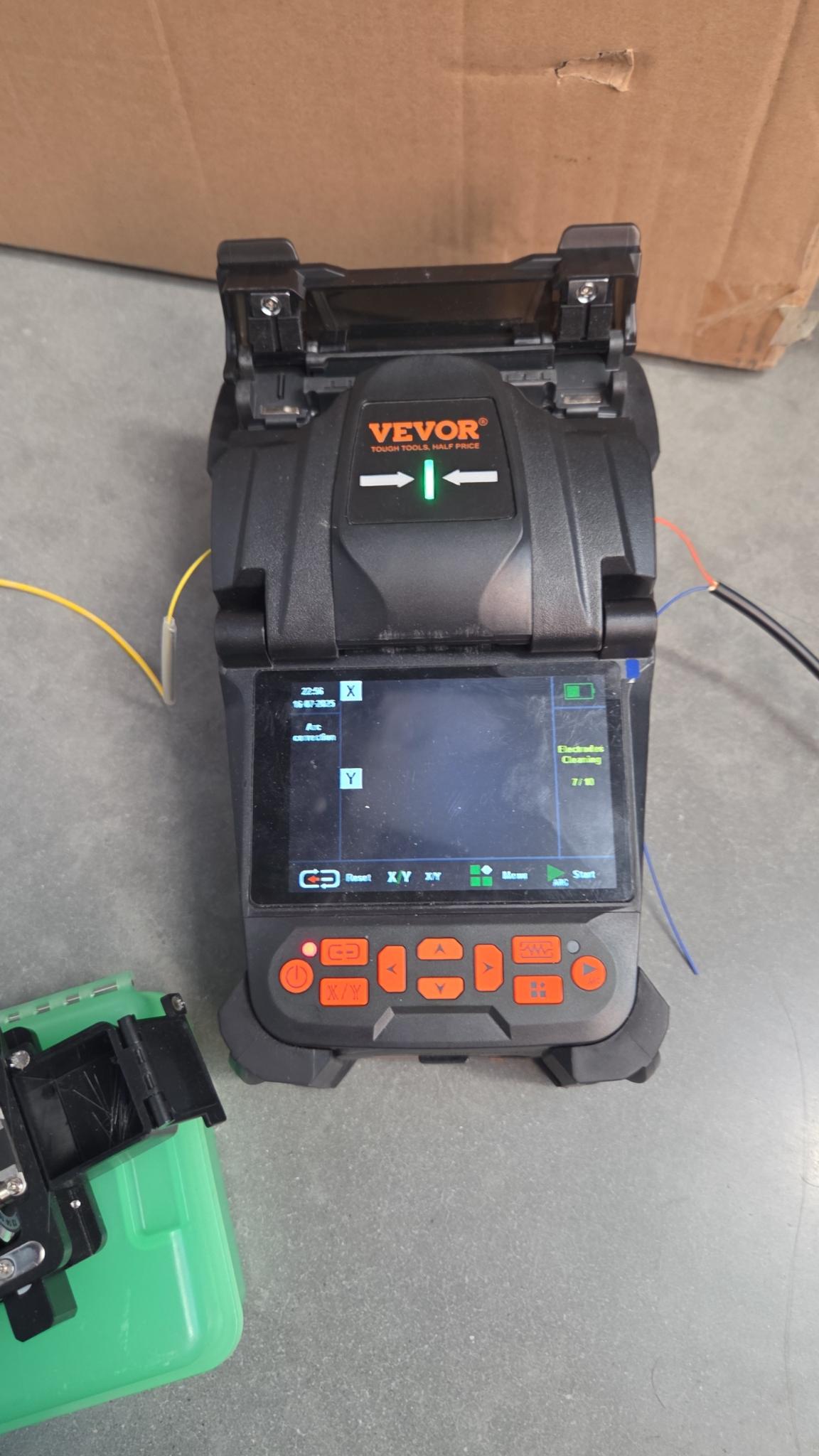
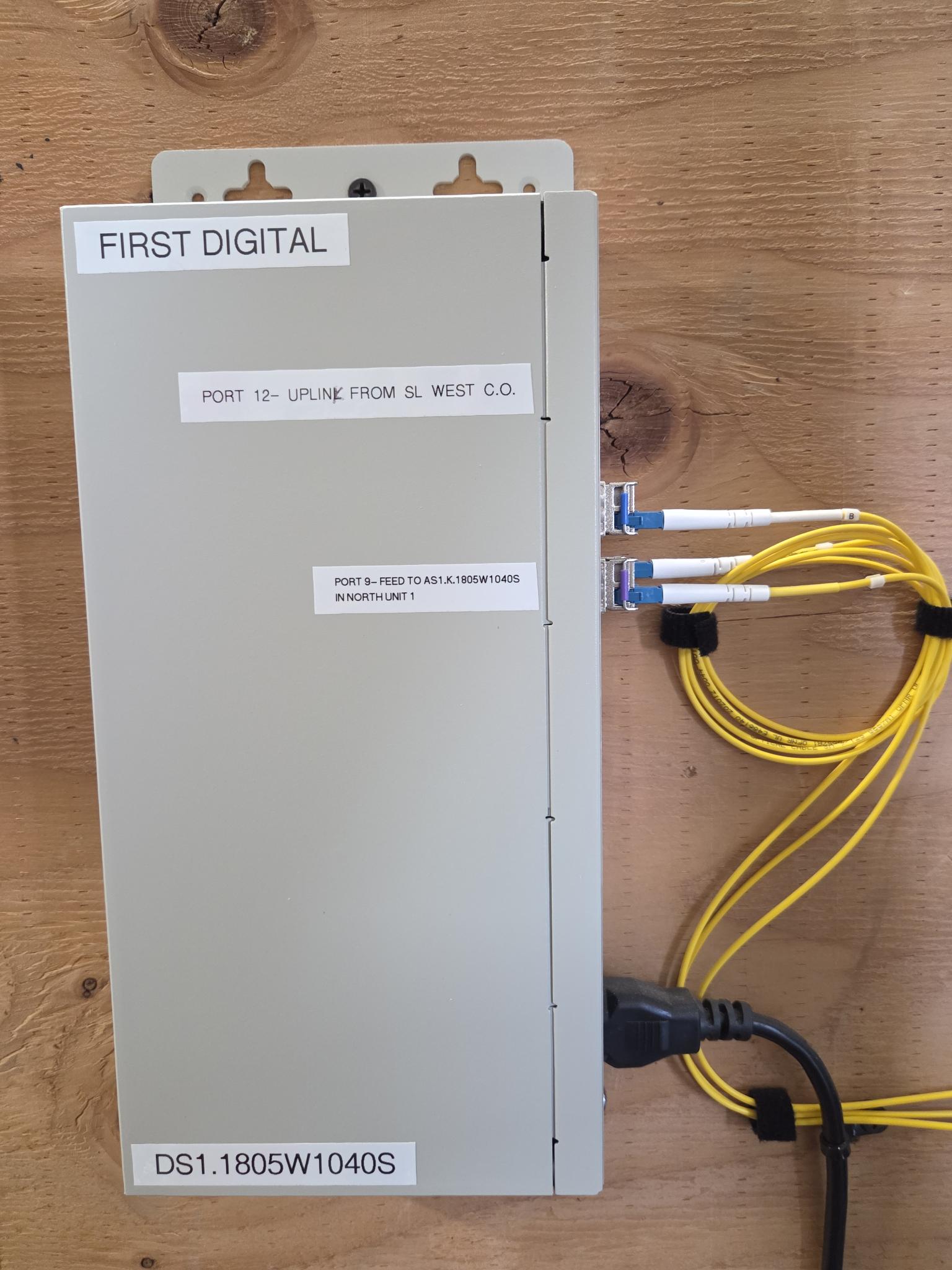
The demarcation point is where the carrier hands off service. Our crew ran, spliced and terminated fiber to extend that handoff farther into the building. These two views show the equipment used to join the fiber and the patch leads at the carrier enclosure.

Fusion splicer and tools on site
Carrier fiber enclosure and patch leads
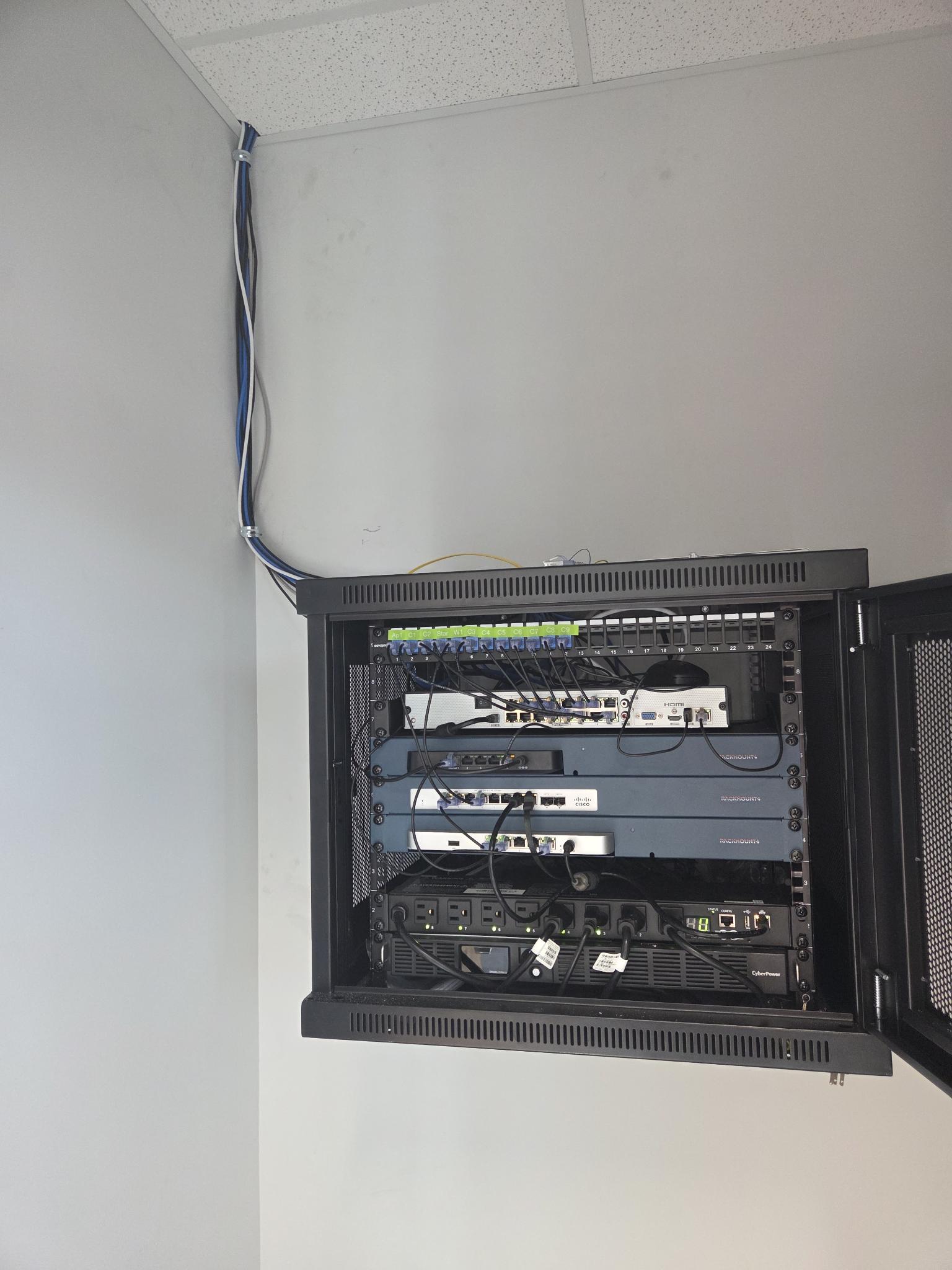
Installed wall rack with network equipment

Installing the network rack

Our scope also included the wall-mounted rack and Cisco network hardware. The open cabinet shows the patching and equipment behind the warehouse installation.

Request a site survey for your building