Rebuilding Wi-Fi and the Fiber Backbone at Davis Conference Center

At Davis Conference Center in Layton, Utah, replacing the aging Ruckus Wi-Fi system meant following each connection back from the conference floor. A new access point needed a cable to a network closet. Each closet needed a fast path back to the core. 1GC handled that entire path, from pulling fiber and copper cable to configuring the switches, routers, and wireless network.

Connecting the network closets

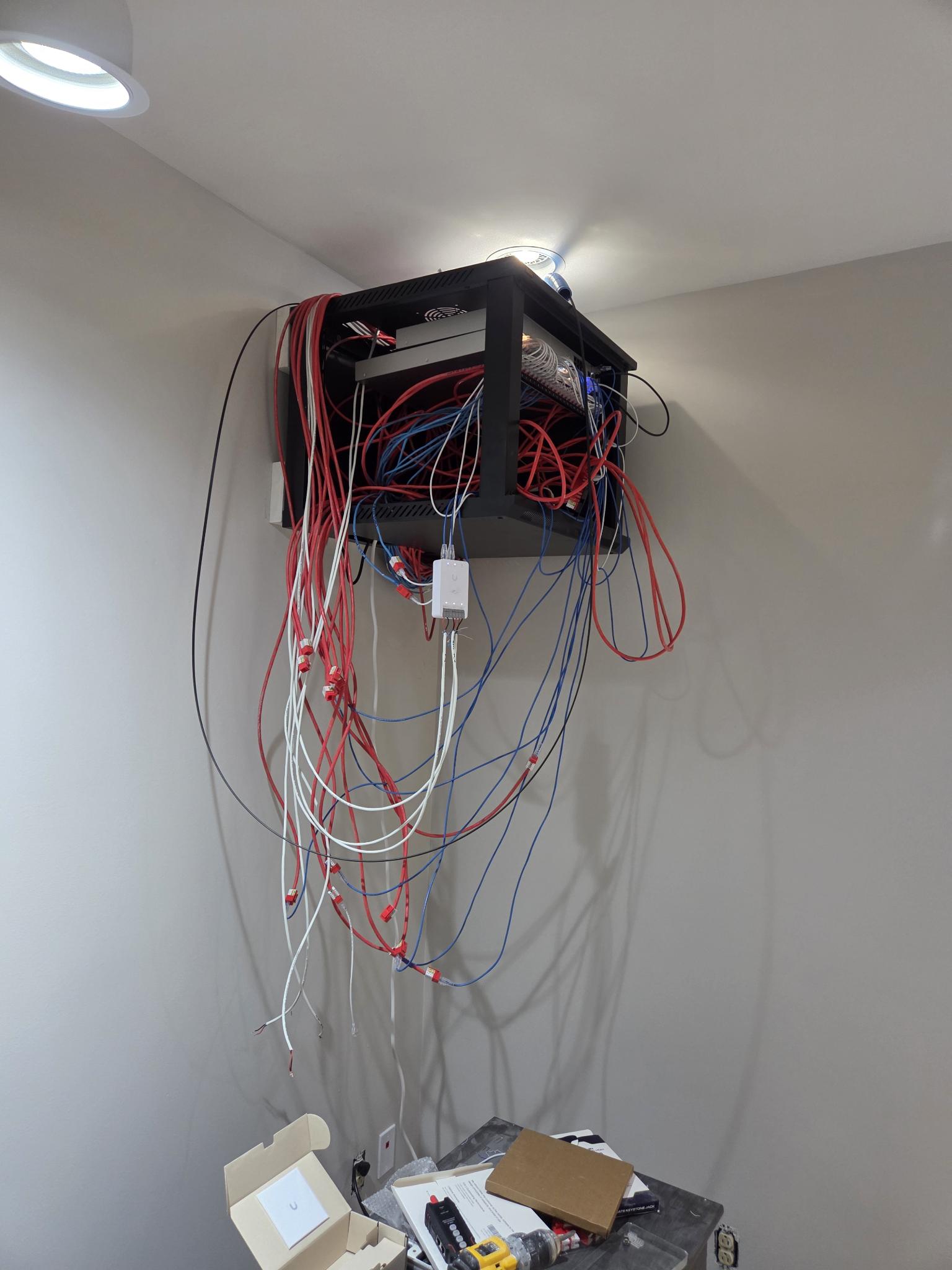
We ran OS2 single-mode fiber between the network closets and the core, giving the venue a backbone with 25-gigabit uplinks. The fiber also gives Davis room to increase capacity in the future as equipment and traffic needs change. From the closets, our crew pulled new Cat 6A runs to serve the wireless installation.
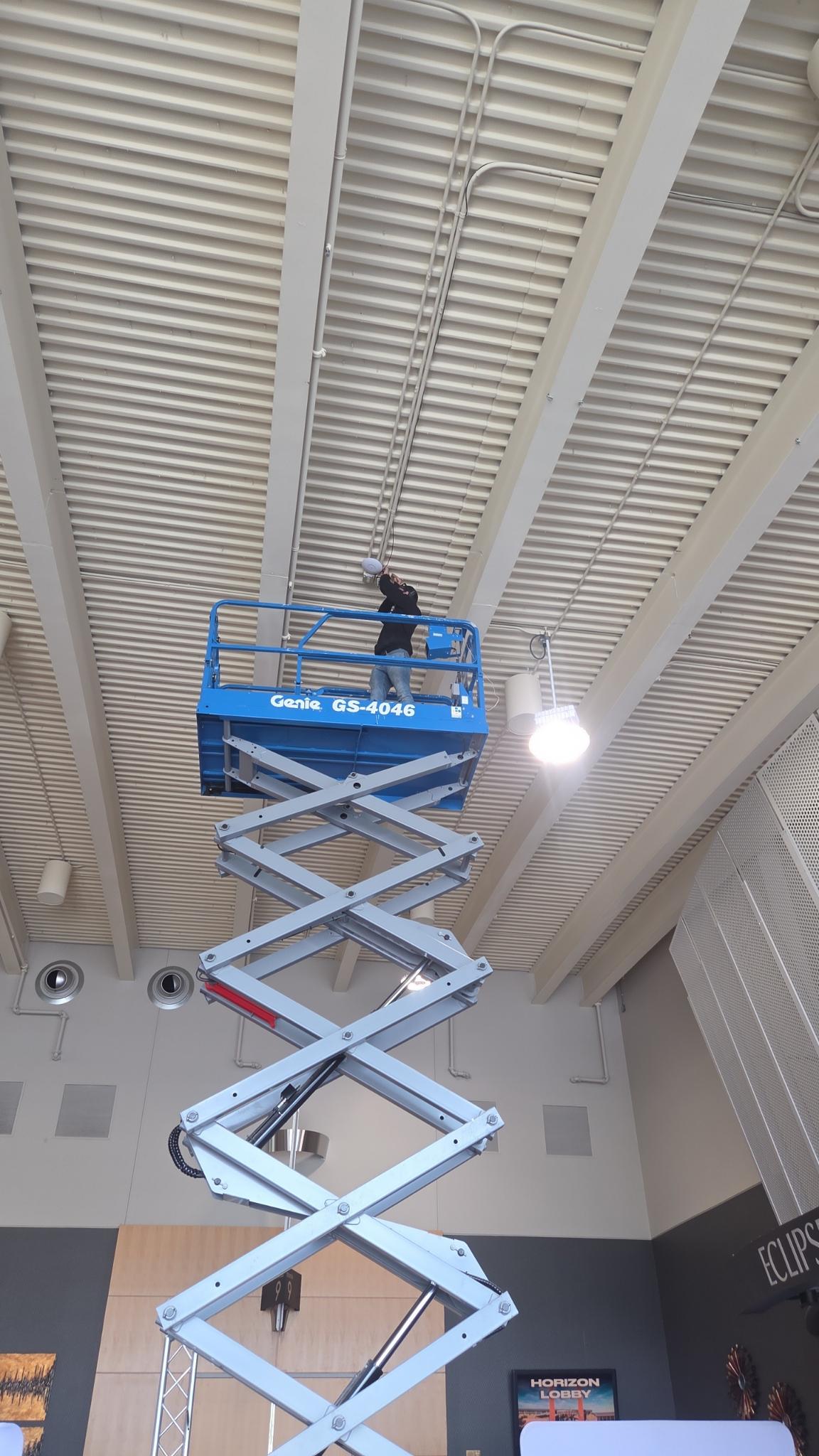
1GC technician working on overhead cabling from a scissor lift
Running overhead cabling at Davis Conference Center in Layton.

Putting 45 access points into service

Our crew installed 45 access points and replaced the venue’s switches and routers. We configured VLANs to keep different types of network traffic separate while sharing the same physical infrastructure. At the routing layer, we configured redundant 10-gigabit routers for failover so a second router can take over if the primary router goes offline.
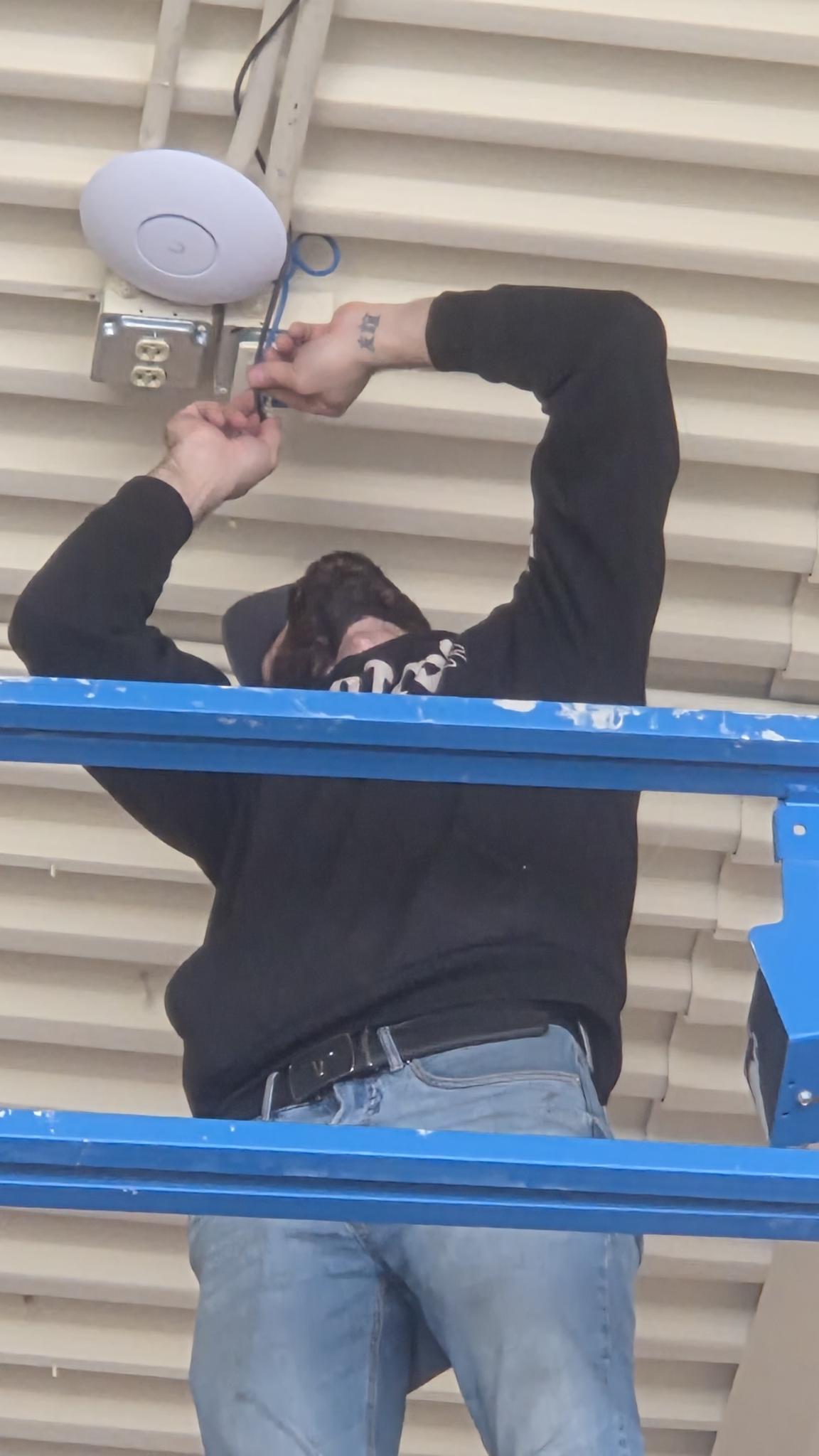
1GC crew installing a Wi-Fi access point at Davis Conference Center
Installing one of the venue’s 45 wireless access points.

A second fiber handoff to UTOPIA

The conference center also needed redundancy where the carrier hands off service to the building. Davis has two fiber uplinks to UTOPIA. 1GC managed the installation of one of those links so the venue could connect through a second handoff instead of depending on a single demarcation point.

Working with the venue beyond the installation

We worked directly with Davis Conference Center staff to address questions and resolve issues that came up during the changeover. The work extended beyond connectivity: we also set up a new cloud server where the conference center could store its data.

For a venue planning a similar upgrade, the network closet is a useful place to start a site survey. The cable serving an access point, the uplink serving its closet, and the routers serving the building each play a different role when a conference fills the rooms.
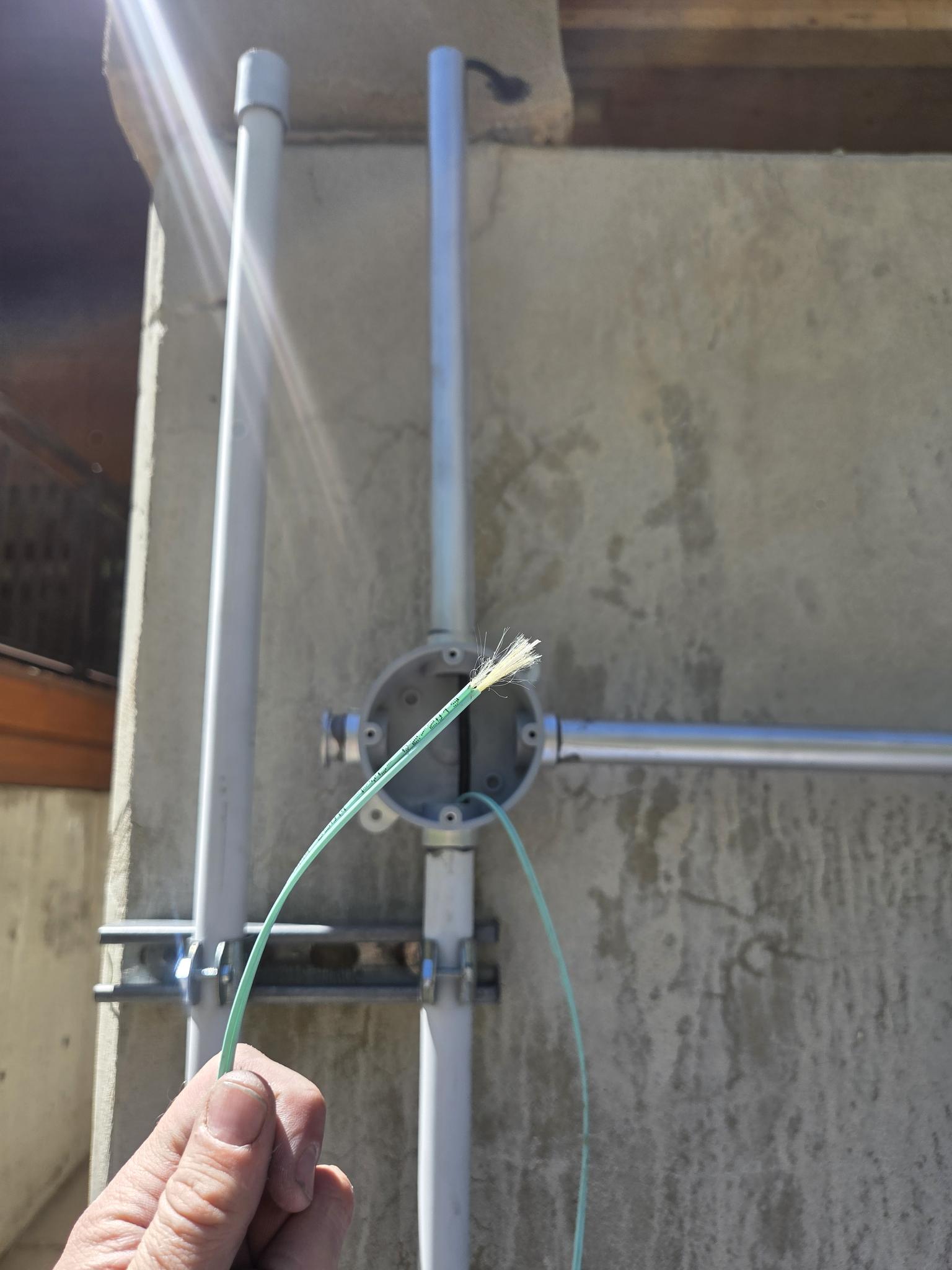
Bringing fiber to the wall jack at Sugarplum Townhouses in Alta

Salt Lake City and Wasatch Front services

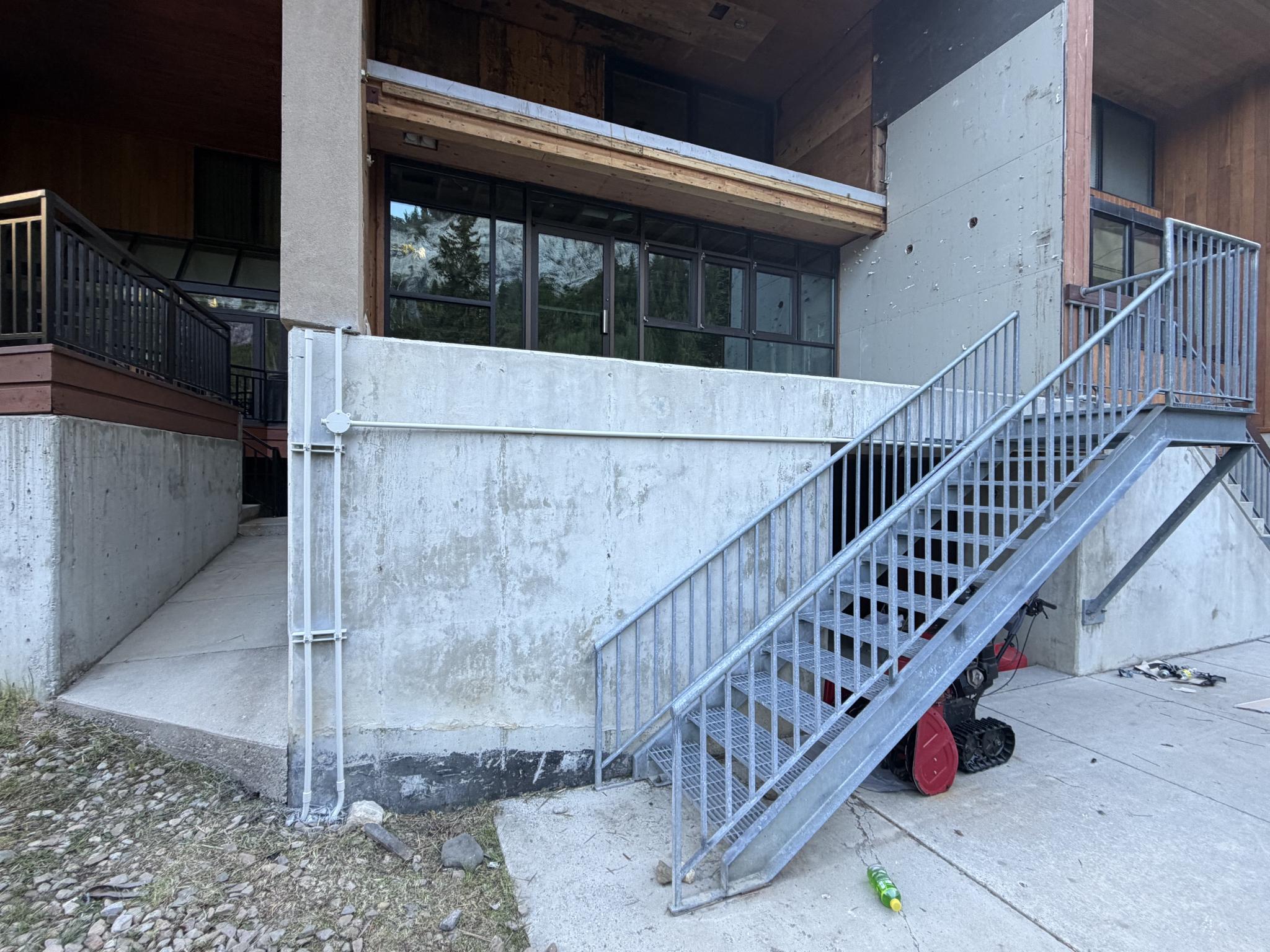
At Sugarplum Townhouses in Alta, Utah, 1GC installed conduit and fiber cabling for a multi-tenant unit (MTU) link to the property’s existing fiber. The finished wall jack is the part a resident or technician sees indoors. Outside, the work followed the concrete wall beside a steel stair and landing.

Finished conduit runs along the concrete wall beside an exterior staircase at Sugarplum Townhouses
The finished exterior pathway in Alta, seen from the foot of the stairs.

Building the exterior pathway

The wide view shows where the route fits against the building. During installation, the open junction box gave the crew access to the cable where the horizontal conduit met the vertical run. Once the run was closed, the conduit and fittings protected the cable along the exposed wall.

Installer handling cable at an open round junction box beside the conduit risers
Routing cable at the open junction box.
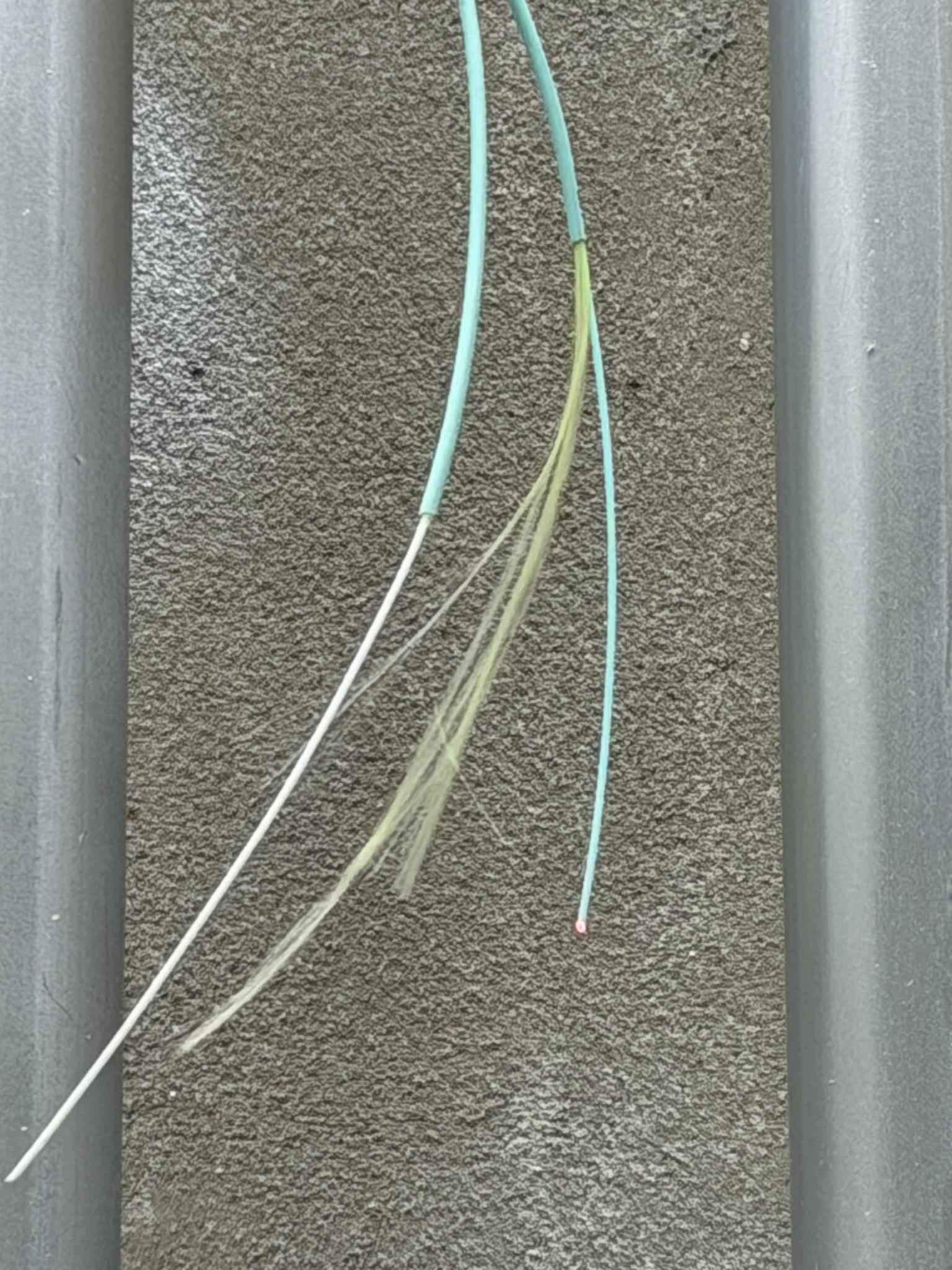
Exposed end of the fiber cable beside metal conduit during preparation
The cable during preparation for termination.

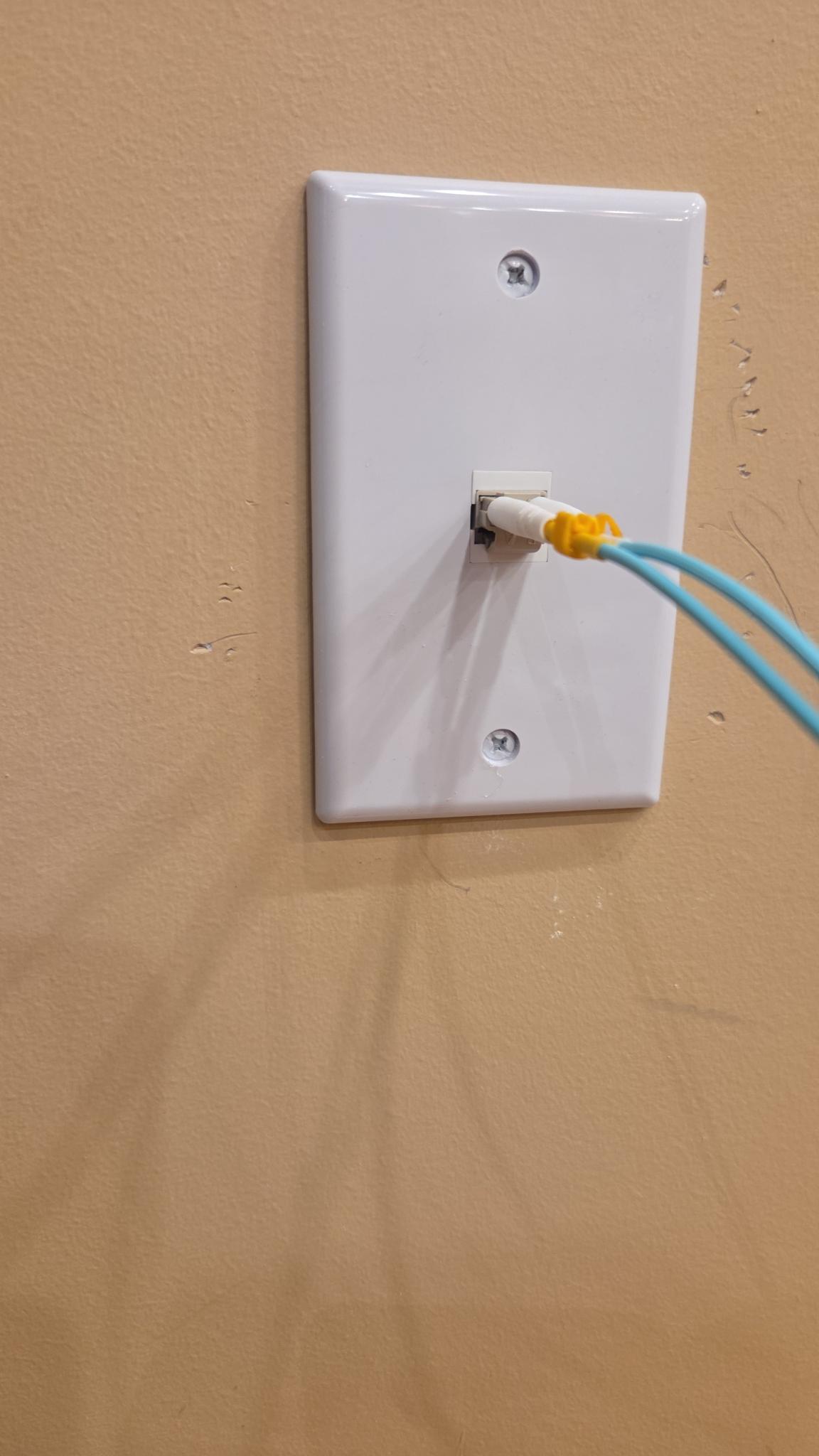
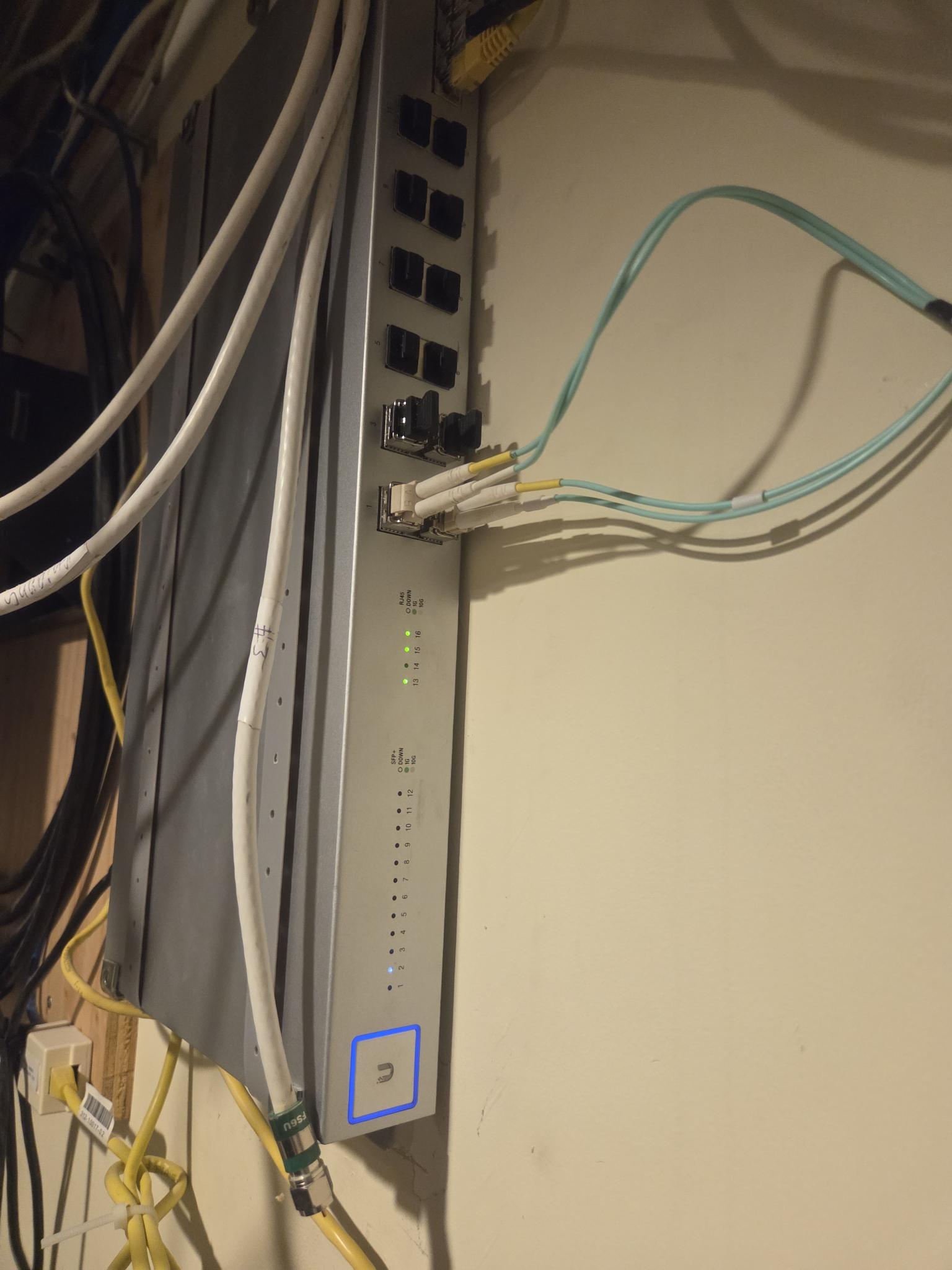
The finished fiber jack and demarcation router

Inside, the fiber terminates at a wall plate that accepts a patch lead. The demarcation router is the network equipment at the handoff. Together, the photos show the difference between the installed building cabling, the replaceable patch lead and the equipment the link serves.

Fiber patch lead plugged into the finished white wall jack
The finished fiber jack.
Demarcation router with fiber patch leads connected
The demarcation router at the property.

Planning a fiber link for a multi-tenant property?

Start with three points on the plan: the existing fiber handoff, the proposed jack location and the pathway between them. A photo of the equipment room and a view of the exterior route help us assess where new conduit may be needed.

Request a site survey

12 cameras and a fiber demarc extension for a Salt Lake City warehouse

At this Salt Lake City warehouse, 1GC installed twelve cameras, ran structured cabling, extended the carrier’s fiber handoff and installed a network rack with Cisco hardware. The work took the crew from a lift outside the loading door to the equipment rack inside.

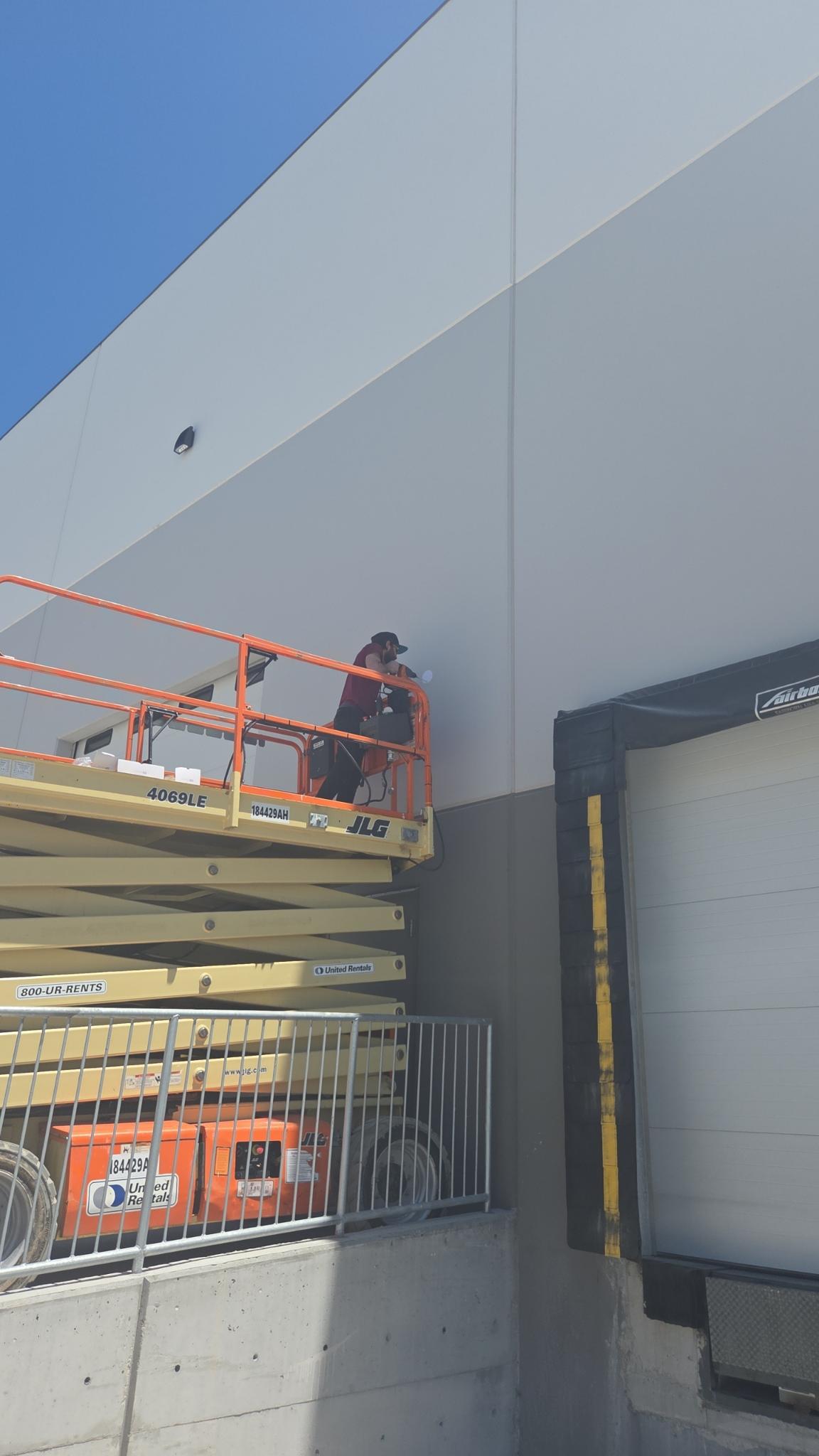
Exterior lift work beside the warehouse loading door

Reaching the camera locations

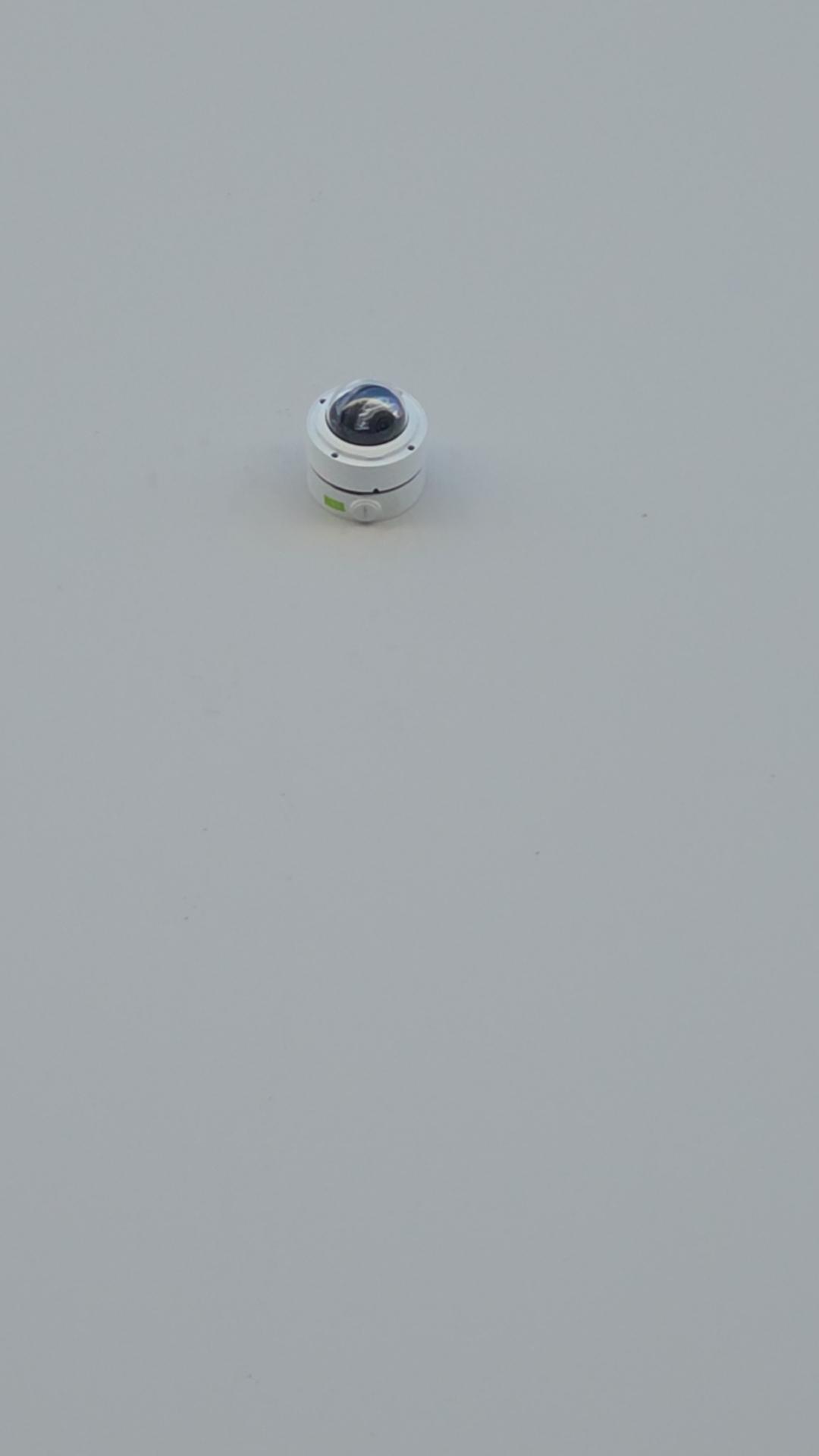
Our installers used lifts to reach elevated mounting locations. The installation included cameras on interior steelwork and on the exterior wall. The wide view shows the height of the work area. The close-up shows one of the twelve cameras after installation.

Finished exterior camera
A 1GC technician works from a scissor lift at the warehouse exterior.

Extending the fiber handoff

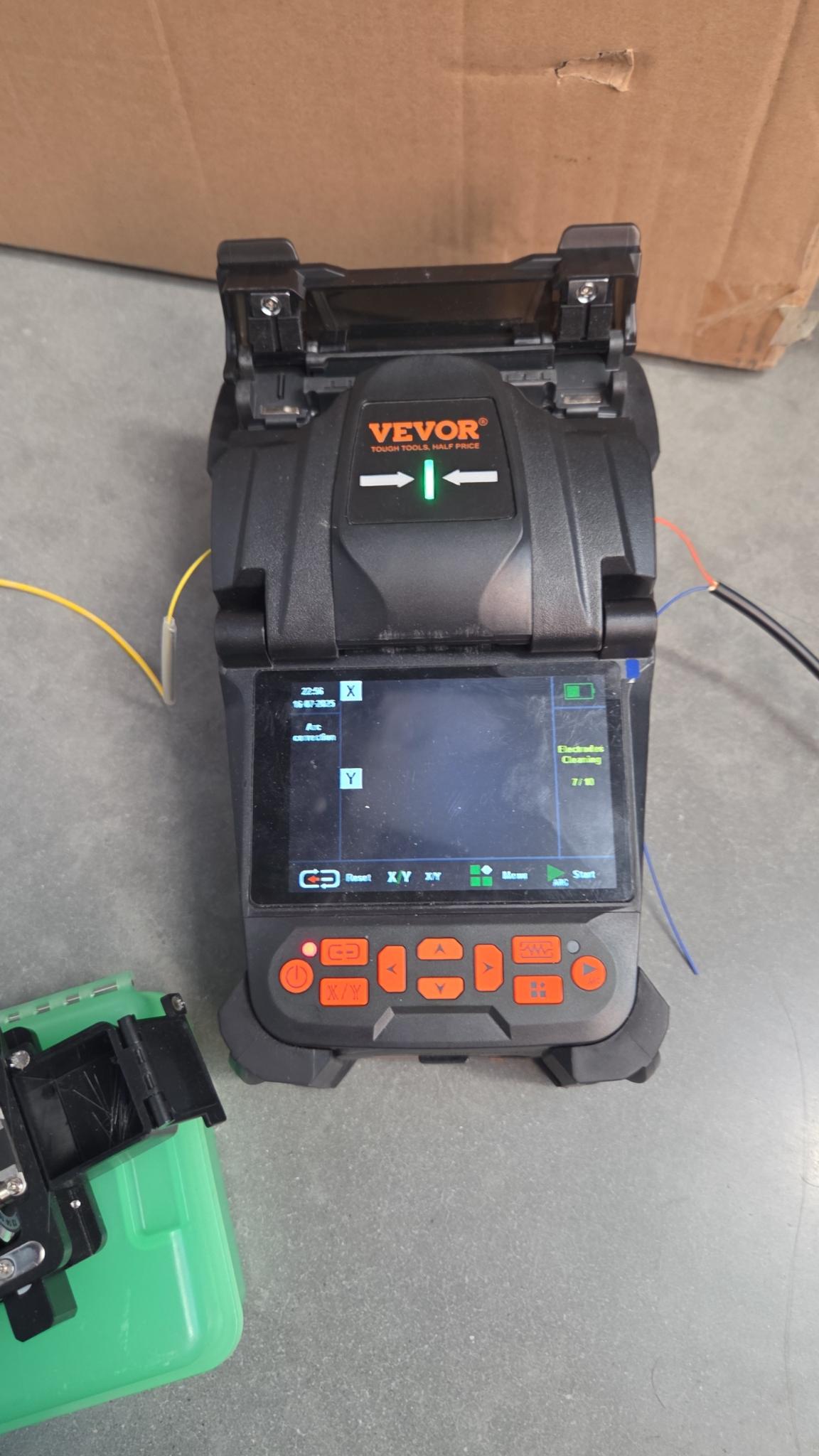
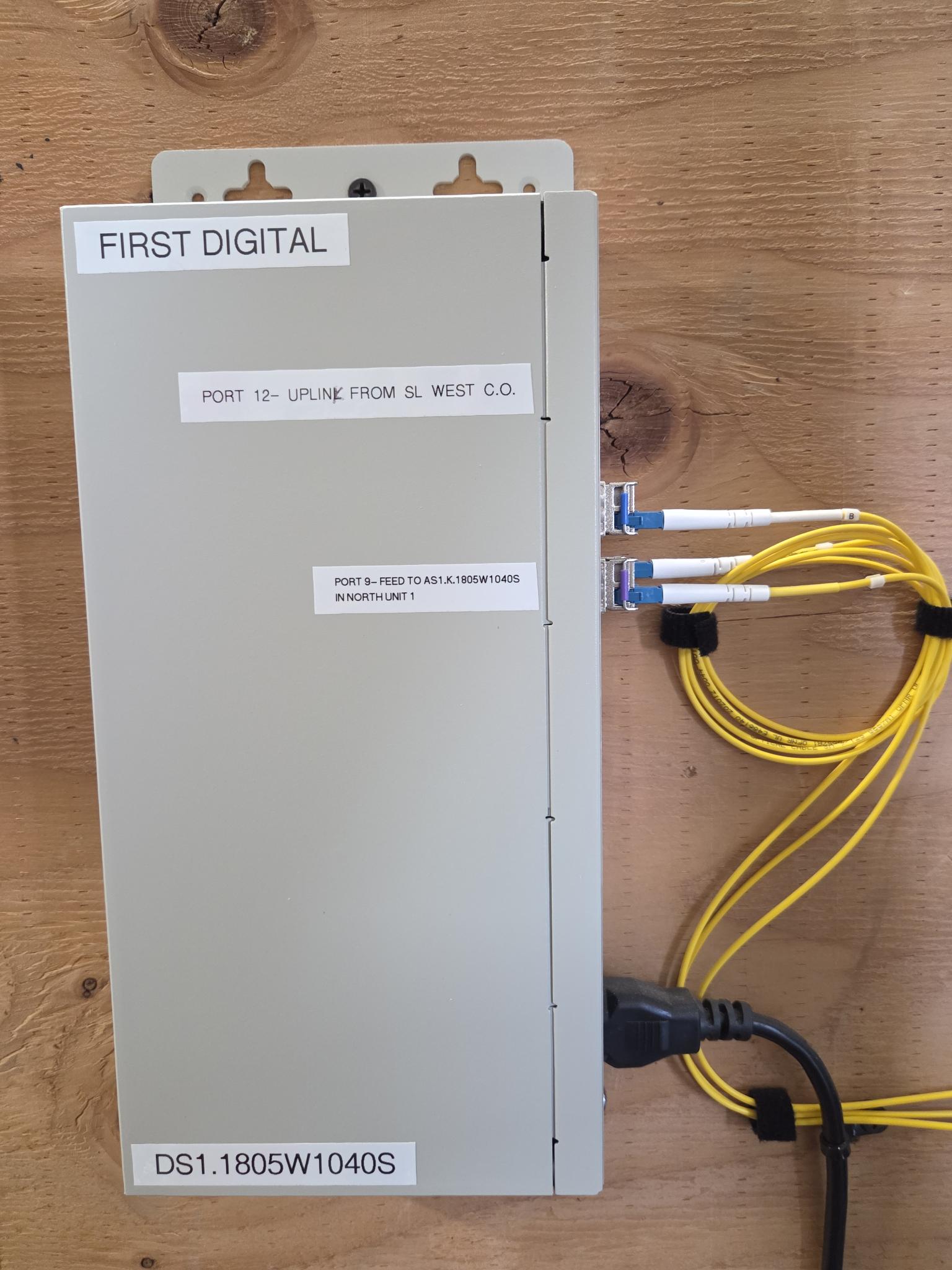
The demarcation point is where the carrier hands off service. Our crew ran, spliced and terminated fiber to extend that handoff farther into the building. These two views show the equipment used to join the fiber and the patch leads at the carrier enclosure.

Fusion splicer and tools on site
Carrier fiber enclosure and patch leads
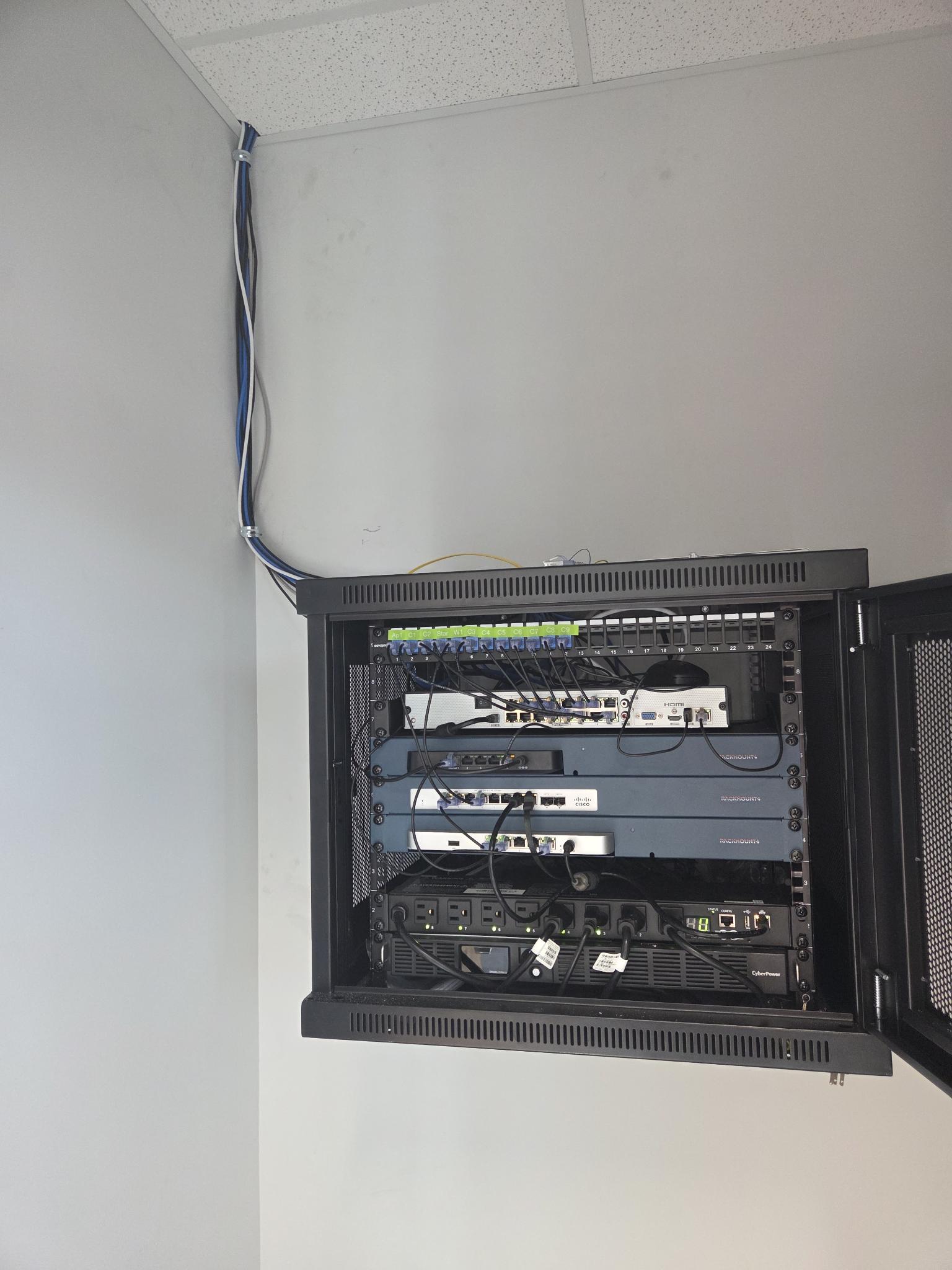
Installed wall rack with network equipment

Installing the network rack

Our scope also included the wall-mounted rack and Cisco network hardware. The open cabinet shows the patching and equipment behind the warehouse installation.

Request a site survey for your building

Behind the walls at Margulis Gelfand DiRuzzo & Lambson: a St. Louis law office installation

When Margulis Gelfand DiRuzzo & Lambson bought a St. Louis metro office building dating to the 1950s, the firm took on a whole-building remodel. It hired 1GC to handle the information technology from start to finish. Our construction crew opened walls so our datacom team could rebuild the cabling throughout the property. Once the Cat 6A runs were in place, we patched and painted the walls.

Those routes connected offices, six Wi-Fi 7 access points, cameras and facial-recognition access control at two doors. They also served two conference rooms with different audiovisual systems. The photos follow the crews from the first cable pulls to the spaces the attorneys use each day.

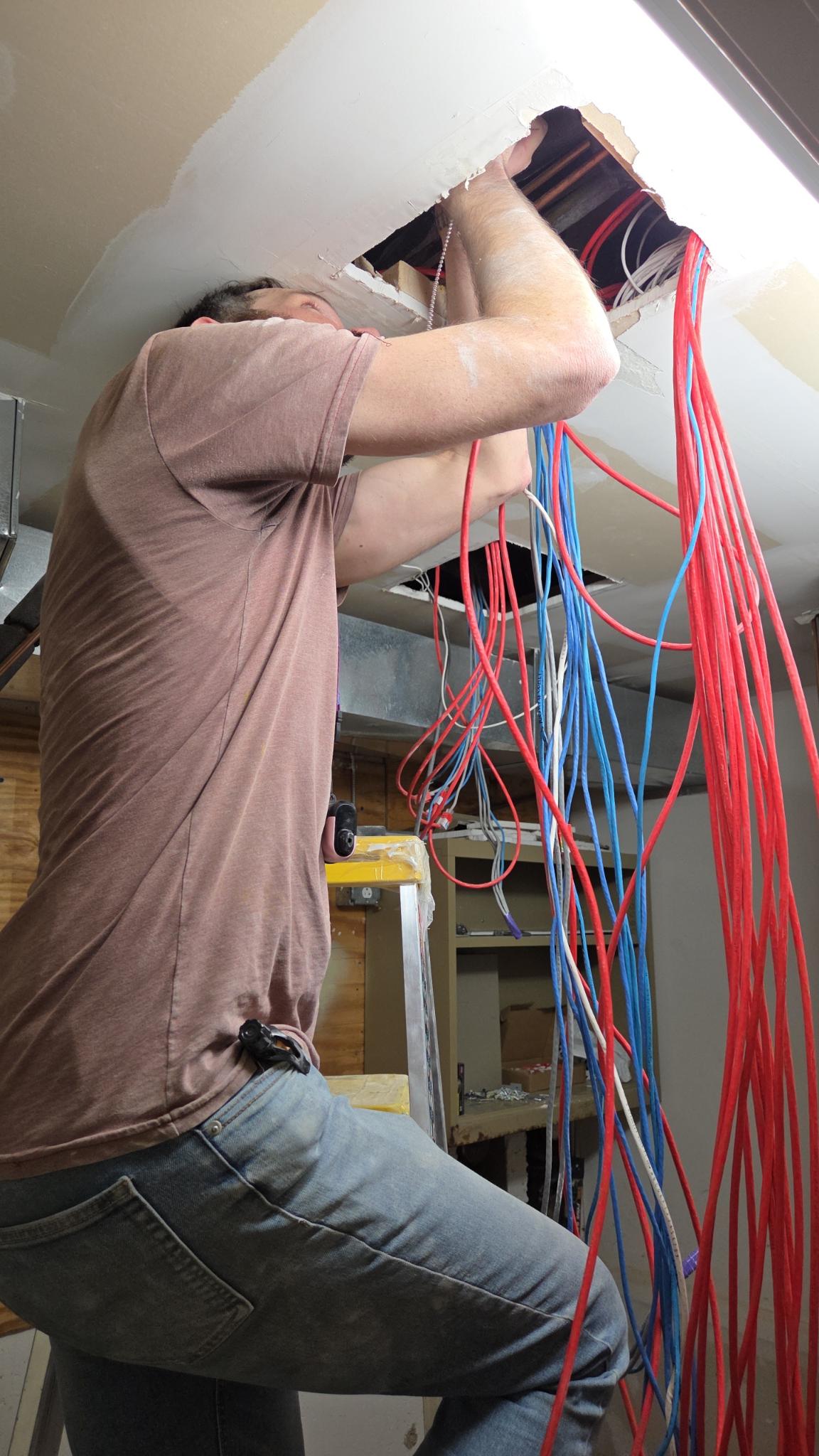
Technician pulling bundled cable overhead
A 1GC technician gathers the Cat 6A runs at the ceiling opening.

Starting with the path into the building

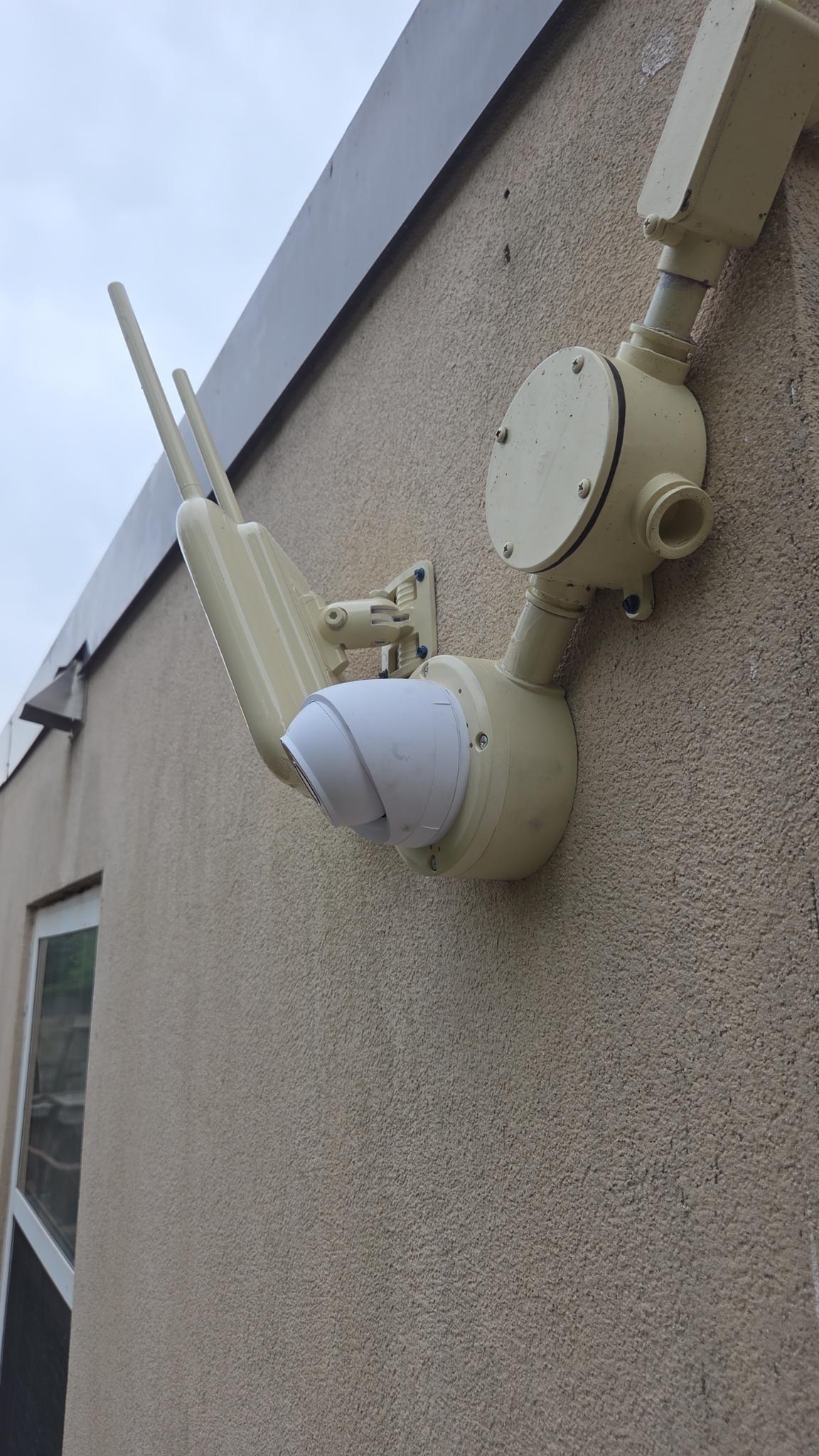
Outside, we installed conduit for AT&T’s fiber entrance, along with exterior pathways for Wi-Fi and cameras. The carrier entrance and the office network had different jobs. The conduit gave the carrier a route inside. The building cabling carried the network from the equipment rack to the places the firm needed service.

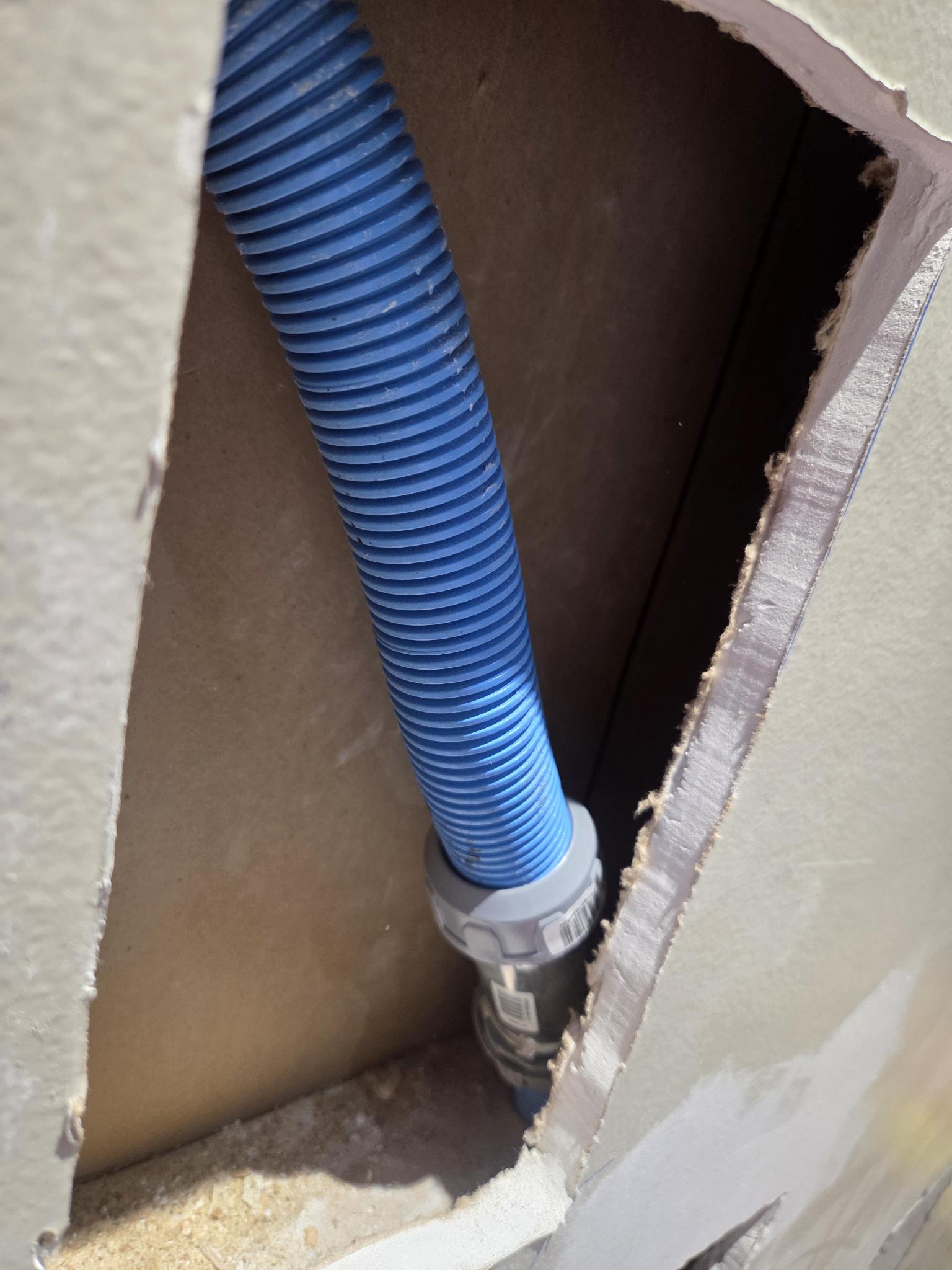
Inside, the rough-in photos show cable drops beside open studs, flexible conduit in a wall cavity and openings for devices. At this stage, a cable end can still be moved before a wall closes. By the time the wall is patched and painted, the location of that opening determines where the finished jack or device sits.

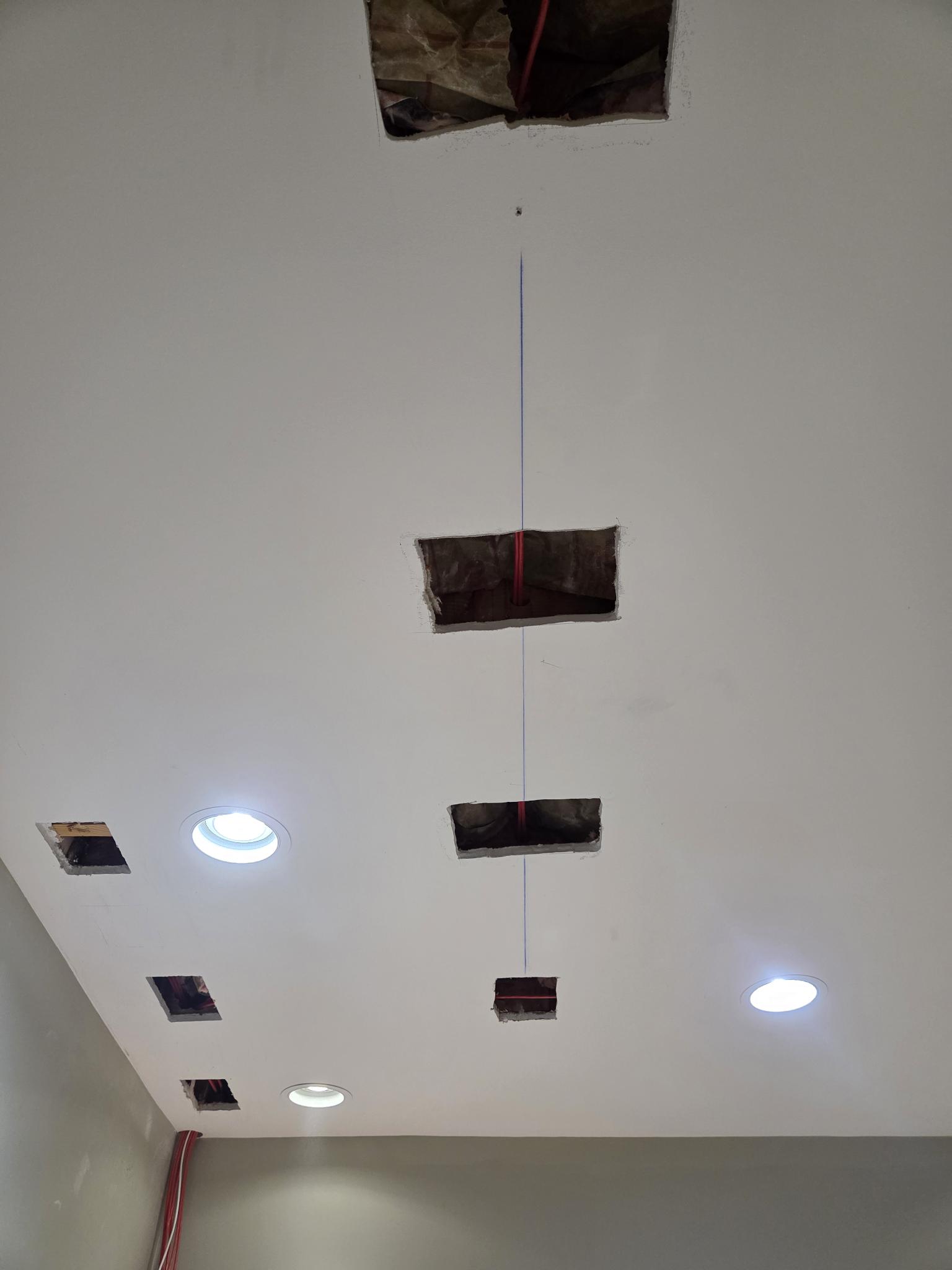
Ceiling openings along cable route
The ceiling openings follow the route the crew needed to reach.
Blue flexible conduit inside wall
Flexible conduit protects the route through the wall cavity.
Exterior device and round junction boxes
Exterior conduit and junction boxes at a mounted device.

From the rack to every office

We installed the network rack, switch and router and ran Cat 6A to jacks in every office and to each access point. Each ceiling-mounted Wi-Fi 7 access point has a wired route back to the switch. The finished access point is a small part of what had to be installed to bring wireless service into the room.

Wall rack during cable installation
The rack during rough-in, before the cables were dressed.
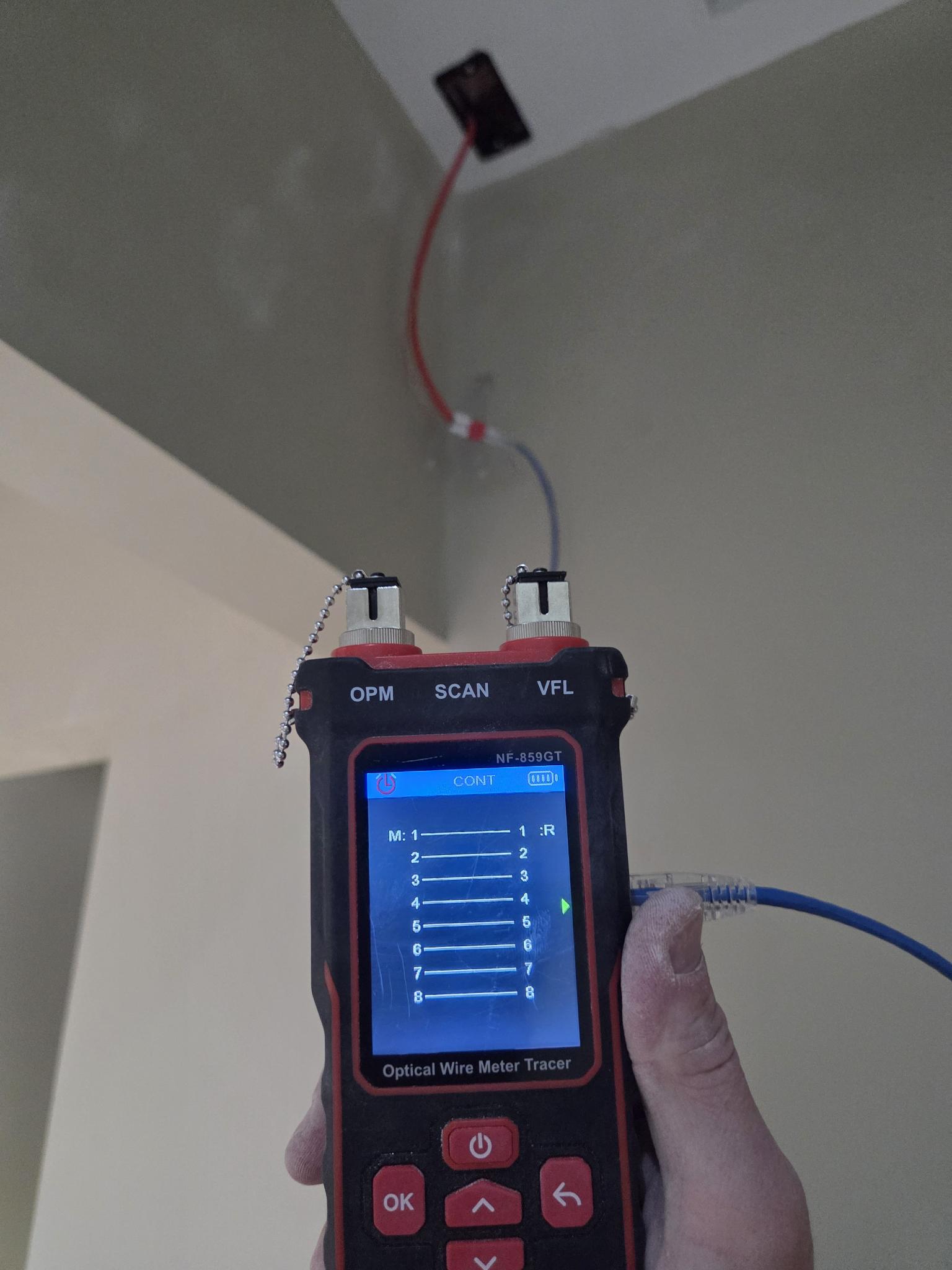
Handheld cable tester at ceiling drop
Checking the office cable run with a handheld tester.
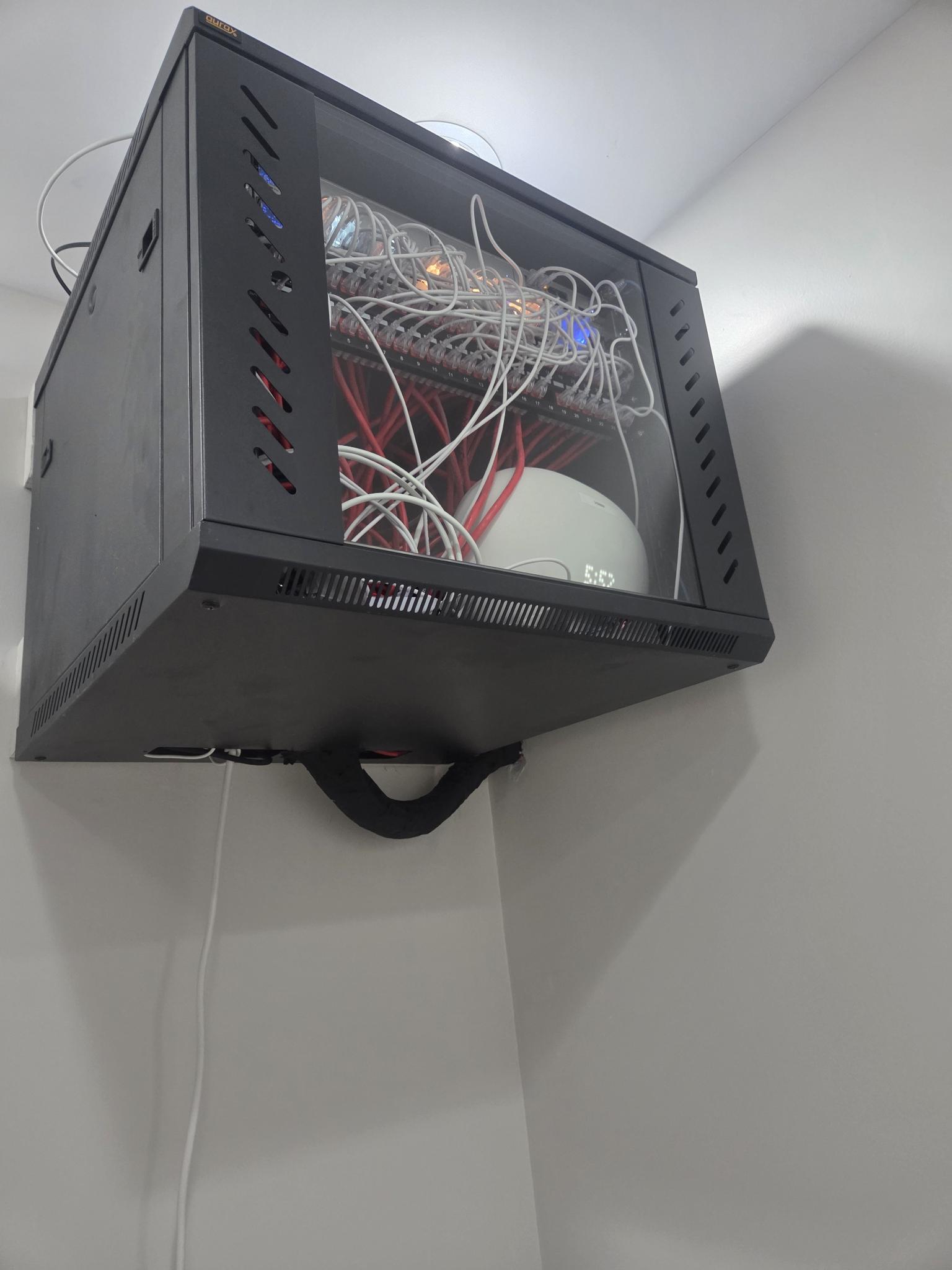
Wall-mounted cabinet containing the law firm’s network equipment
The network rack houses the equipment serving the office cabling.
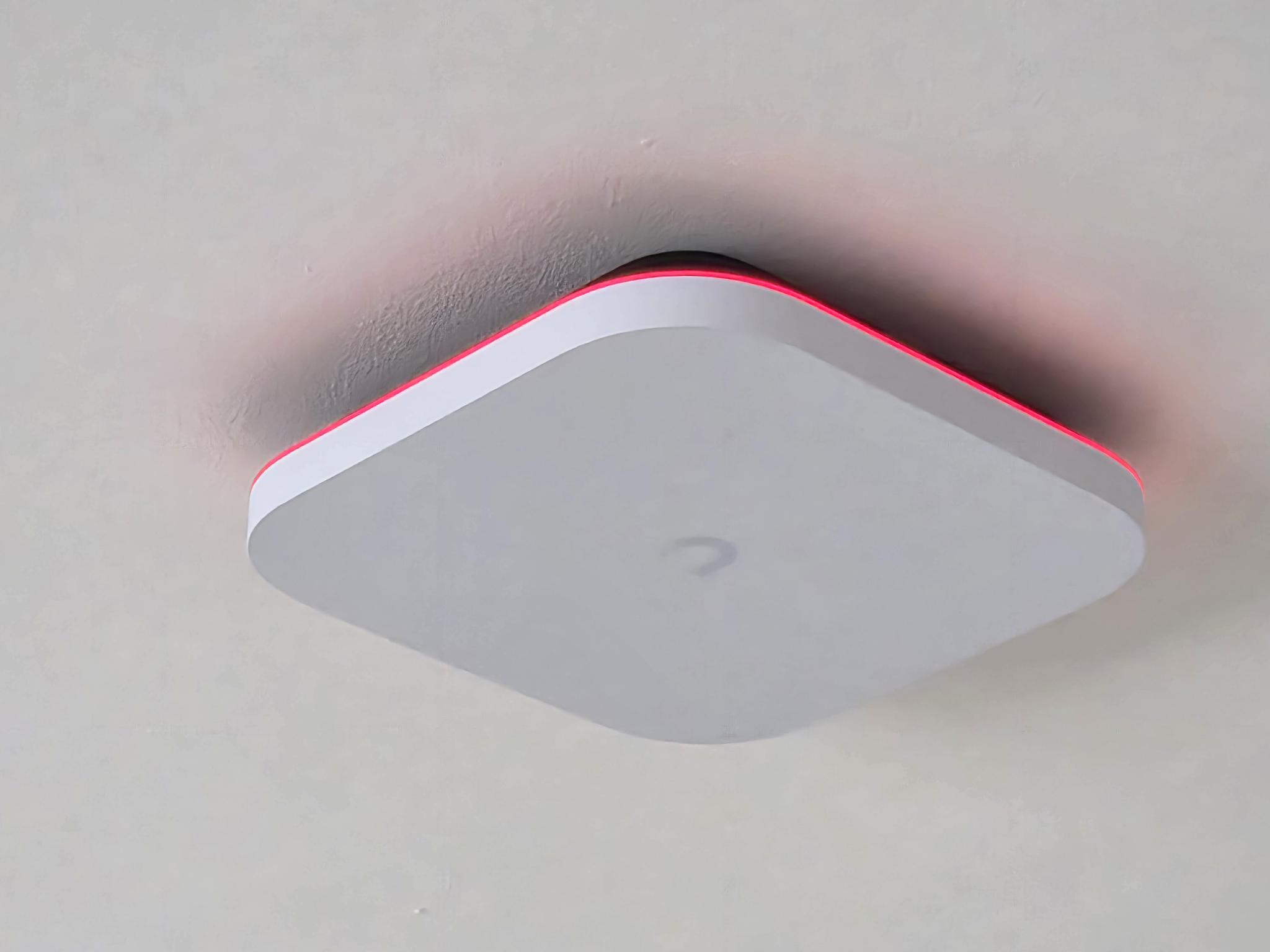
Installed wireless access point on the finished ceiling
One of the finished ceiling access points on the firm’s Wi-Fi 7 network.

Fitting access control to two doors

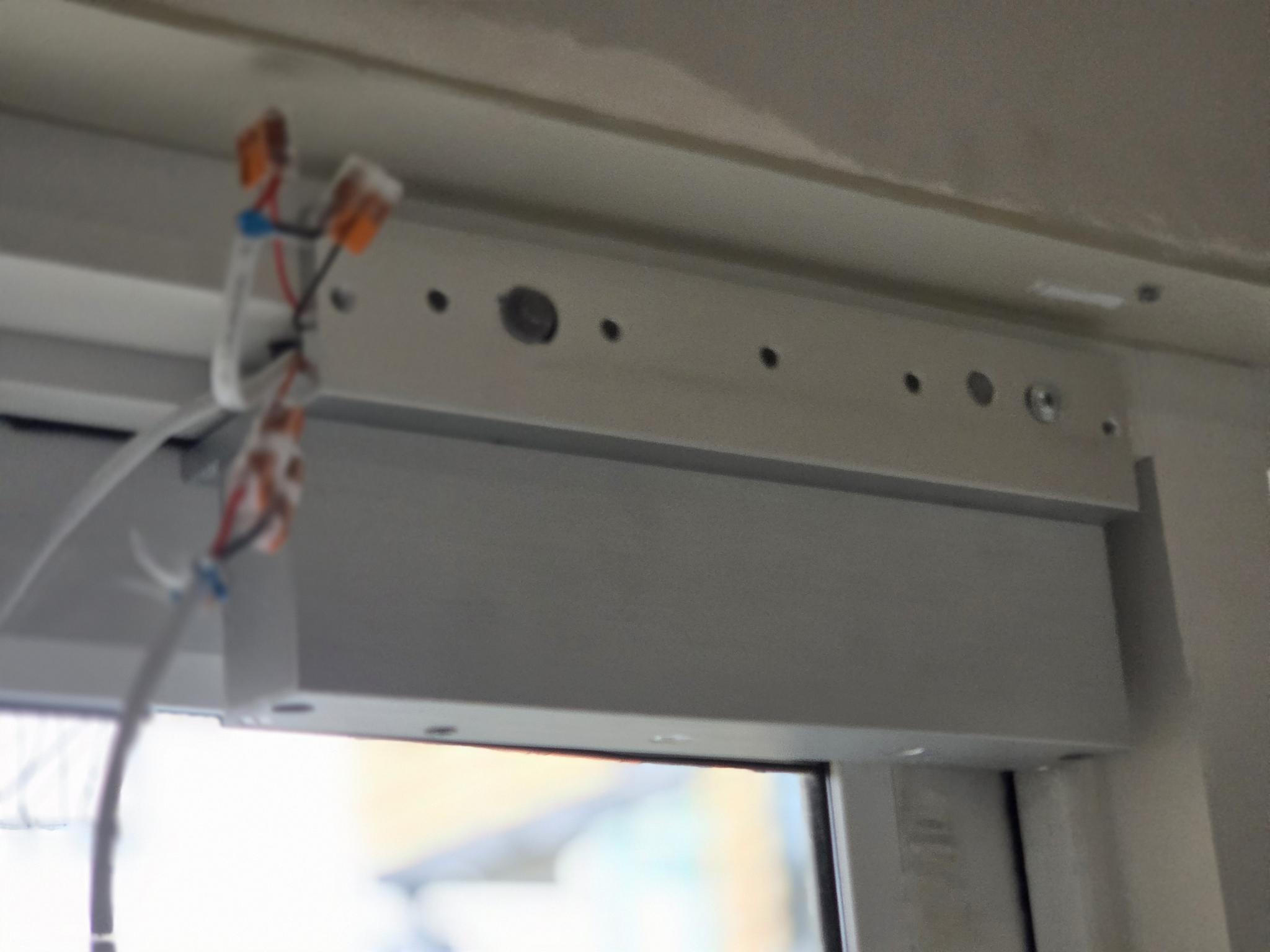
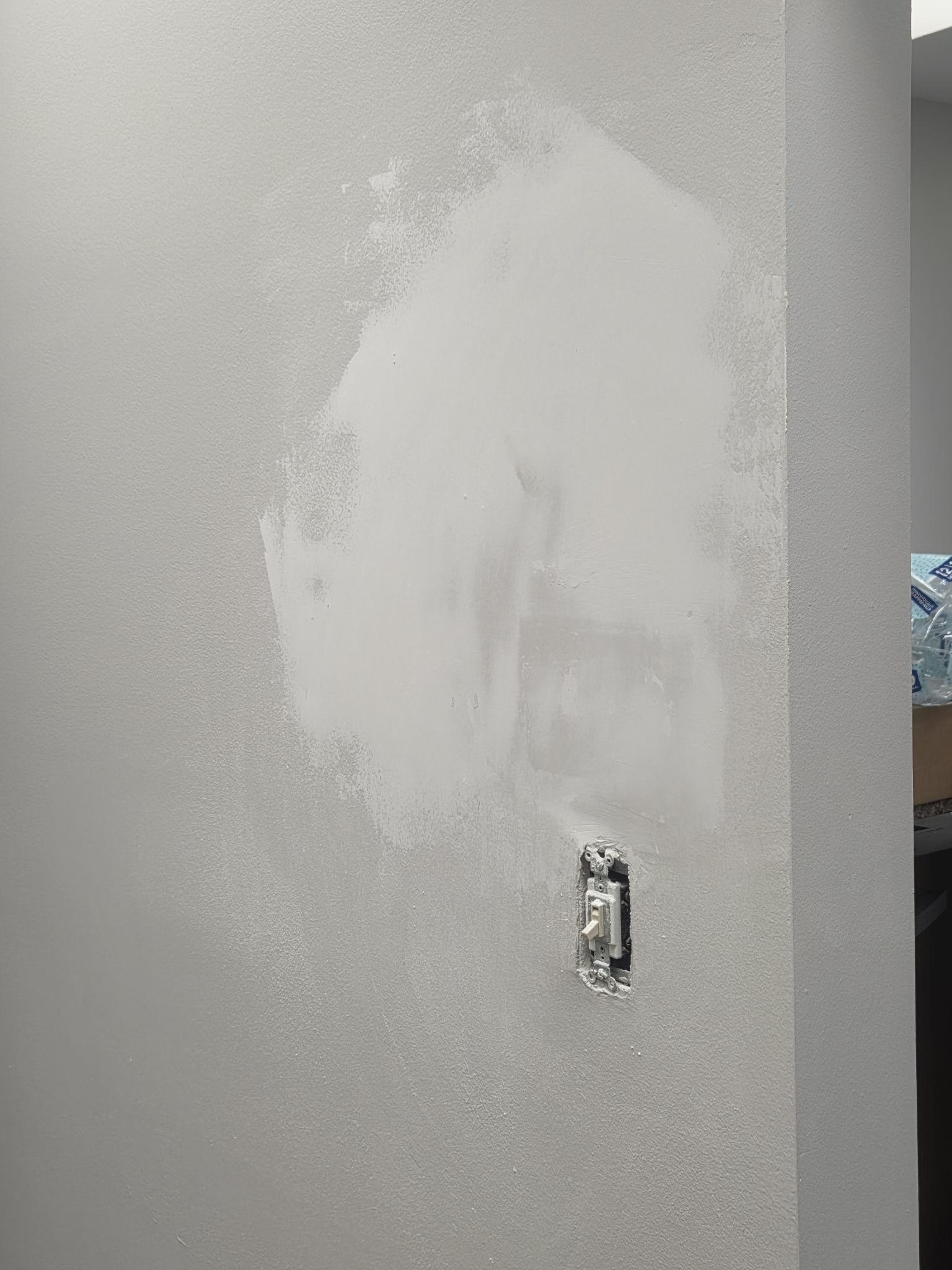
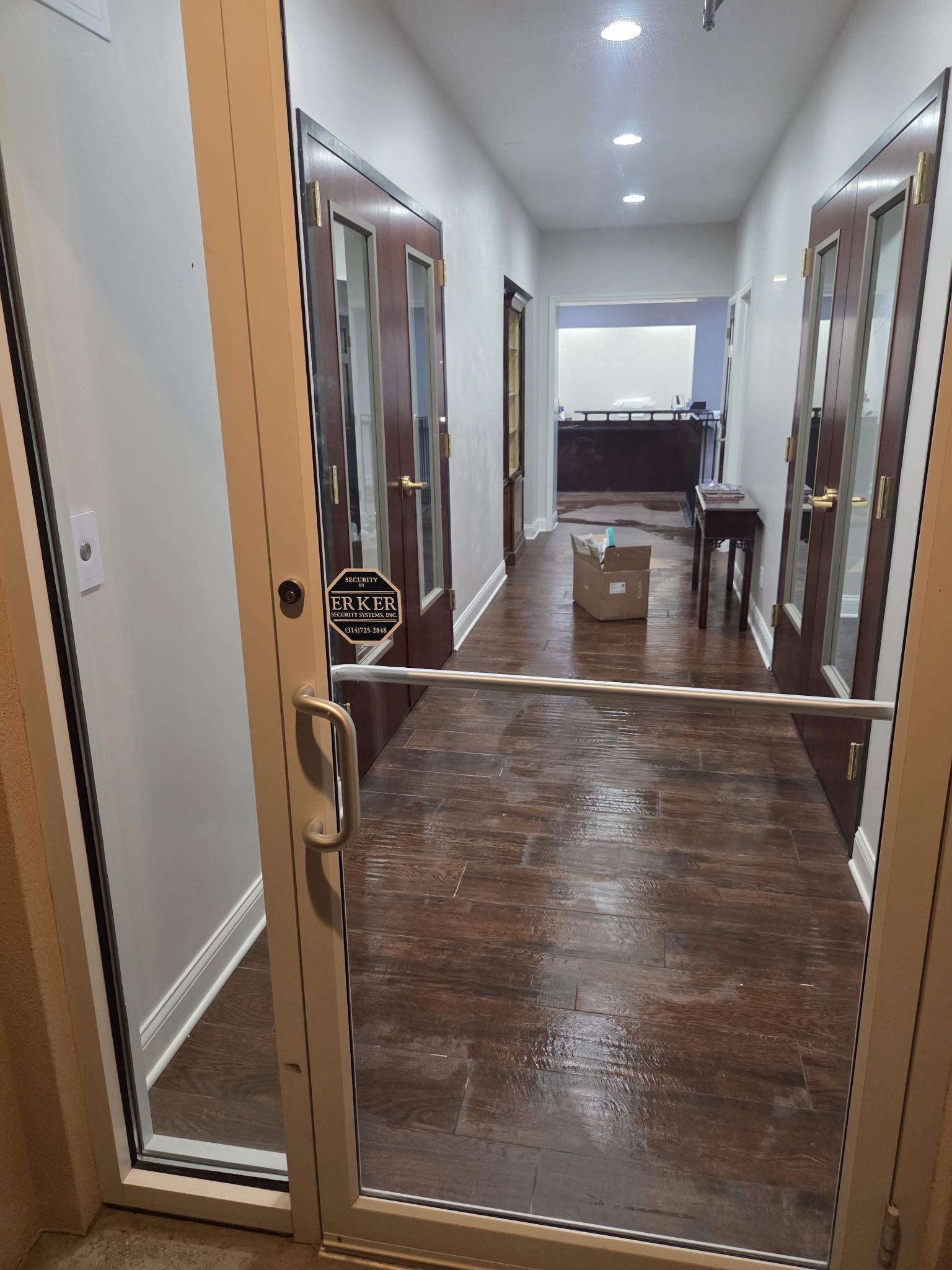
The firm’s installation included facial-recognition access control for two doors and a camera system. The work-in-progress views show the door frame before the header hardware was closed up. Our installers fitted mounting plates, routed wiring into the frame and made the connections that the finished hardware conceals. Wall repair and paint were part of bringing the surrounding office back to a finished condition.

Door header wiring connectors
Access-control wiring at the door header before close-up.
Patched wall around device opening
Wall repair around the device opening before final paint.
Glass entry door and access hardware
The finished glass entry with its access hardware in place.

AV installation in two conference rooms

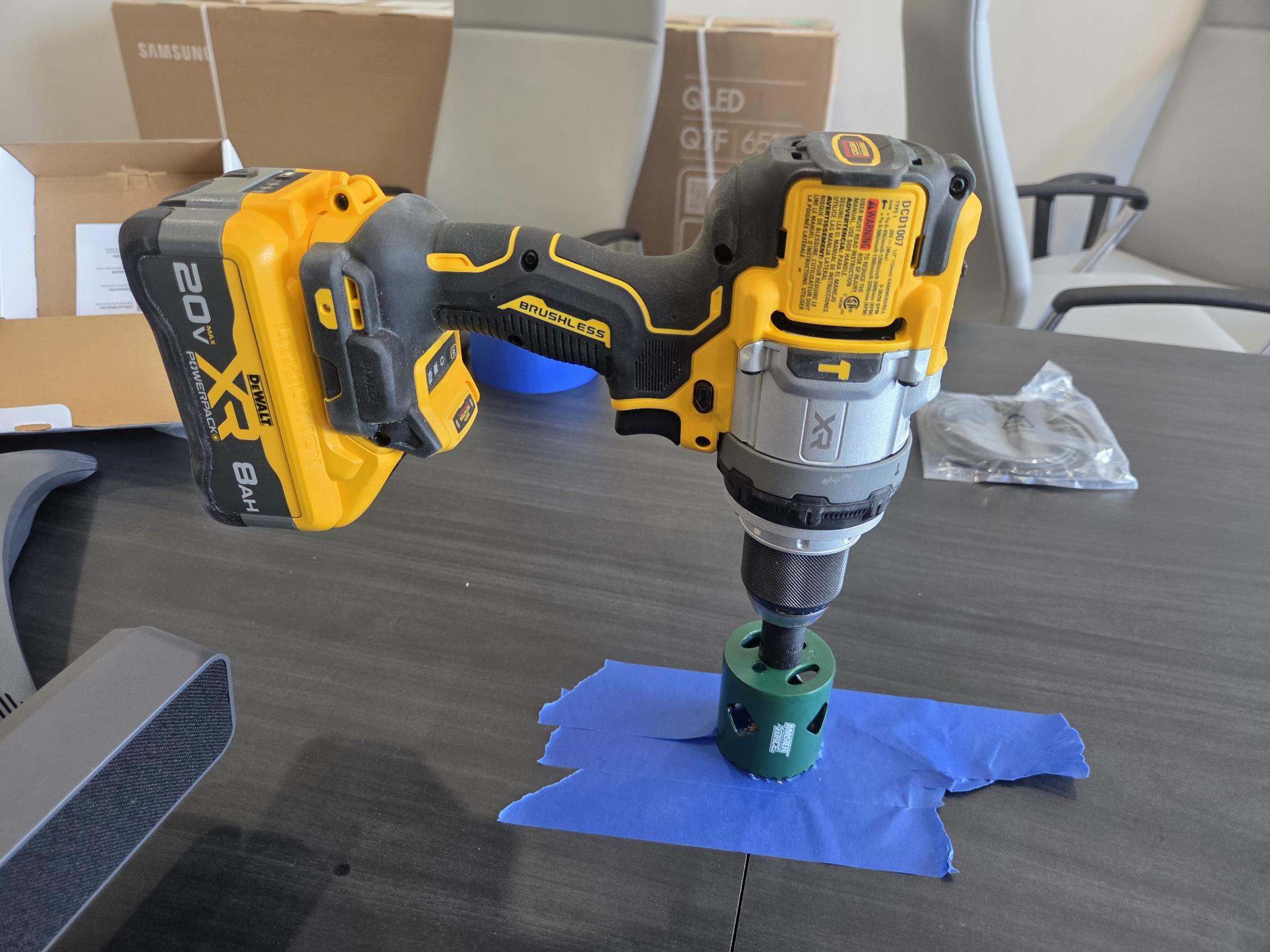
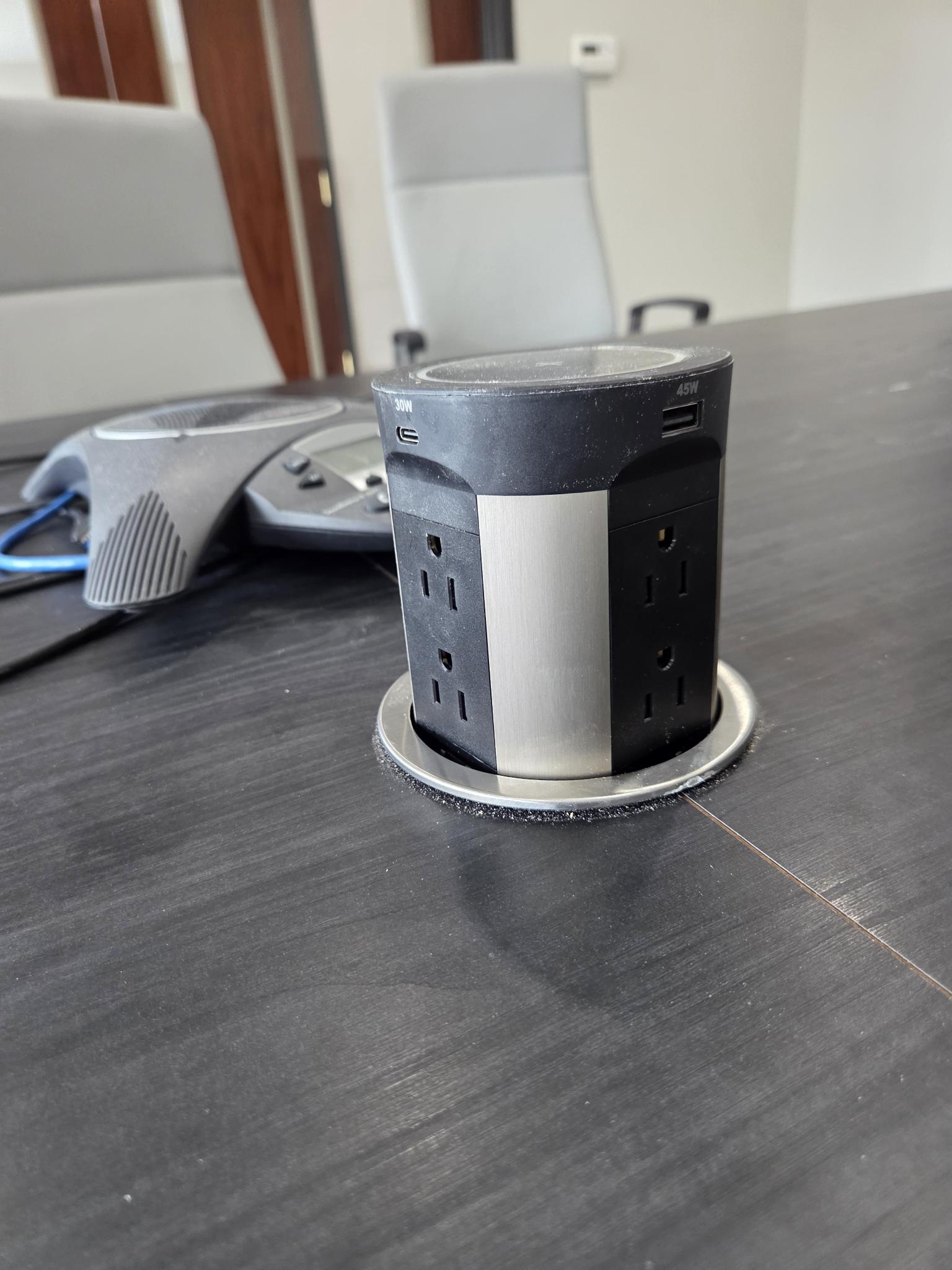
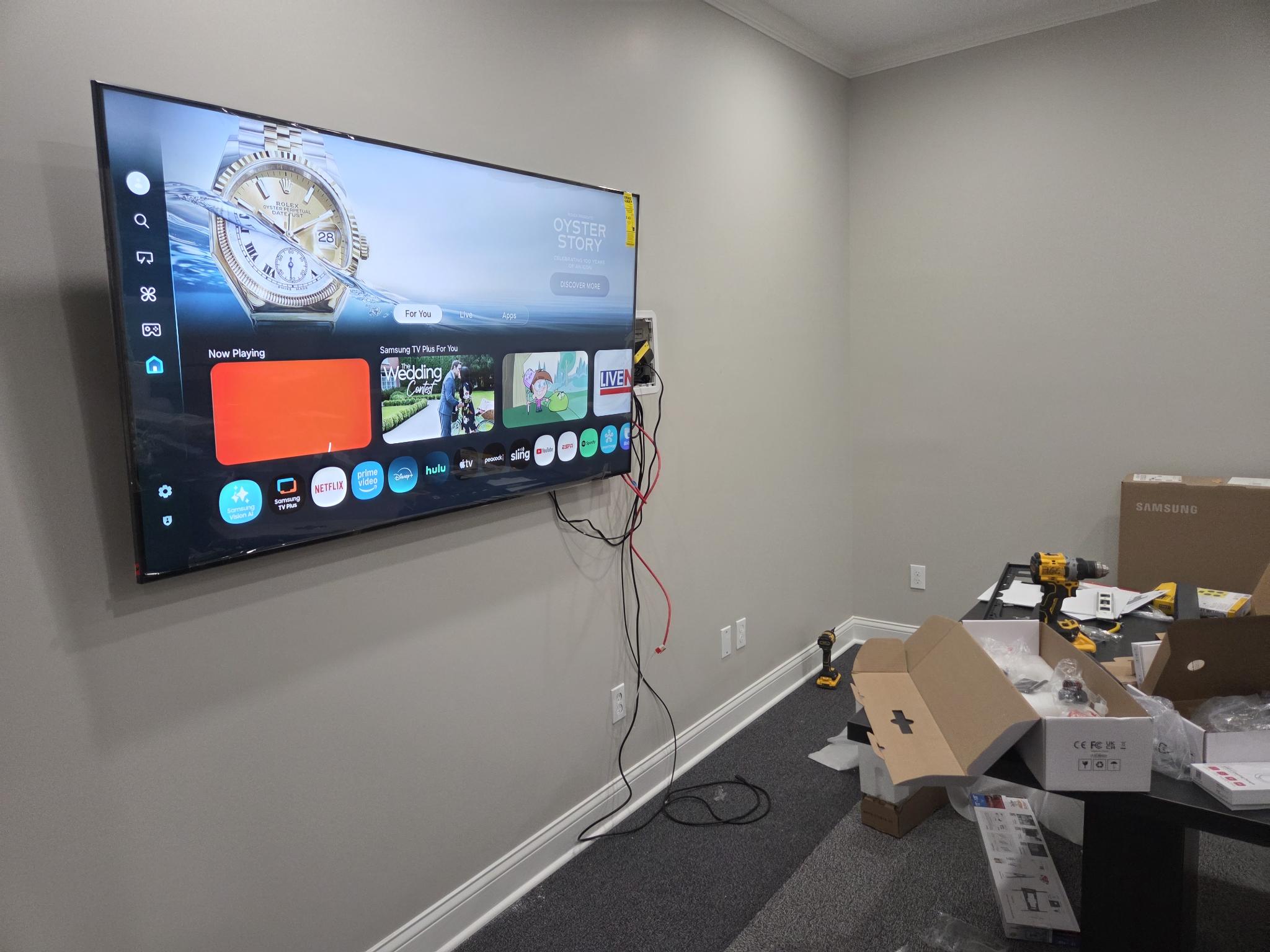
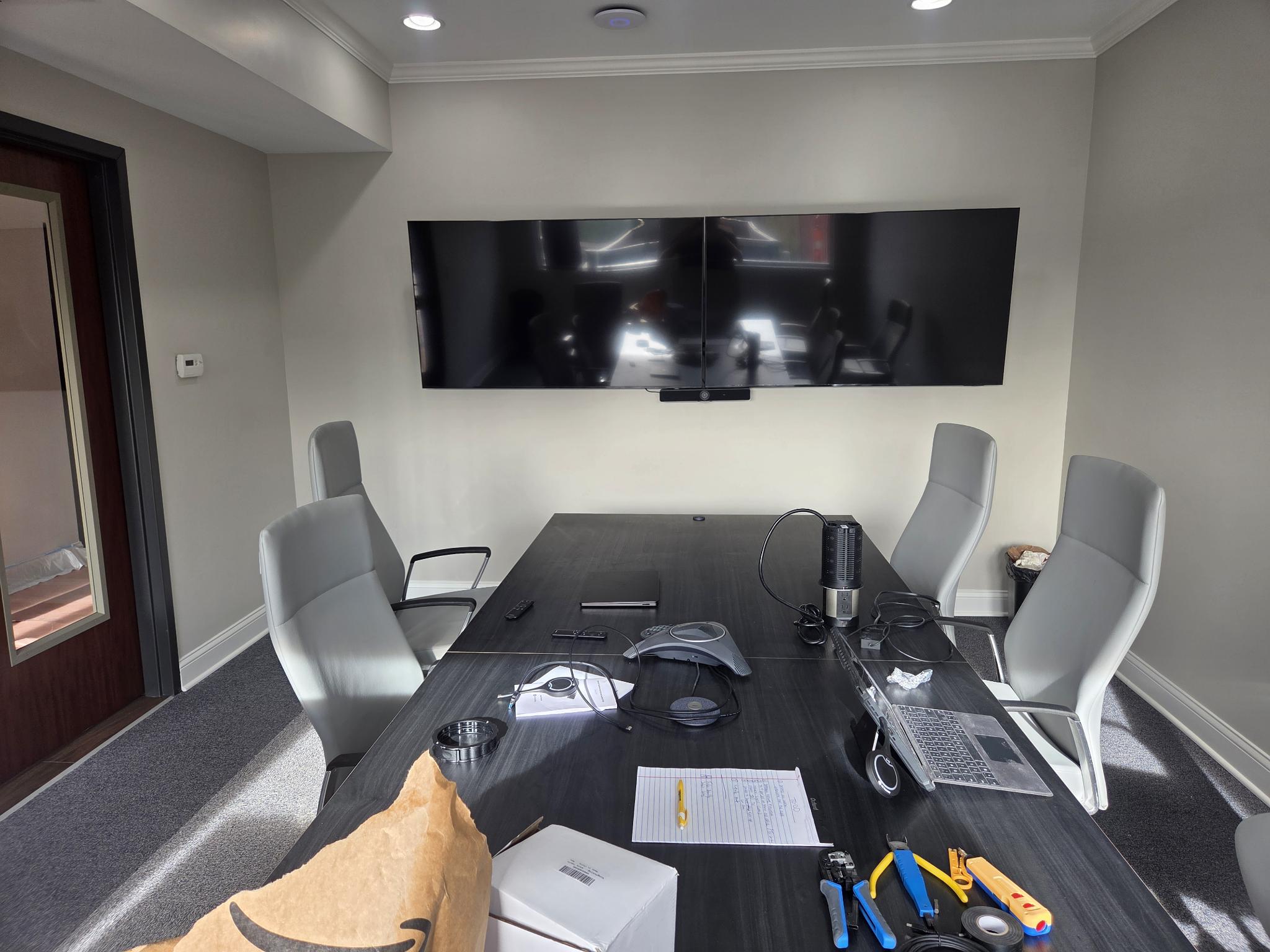
We installed an LG TV with an L bar in one conference room. In the second room, we mounted two new Samsung TVs and configured an AV Access system for video conferencing and casting to both TVs. The table needed power within reach of the people using it. The installation sequence shows the tabletop marked for the cut, the circular opening drilled and the pop-up power module seated in that opening. Those details are easy to overlook in a finished-room photo. They matter every time someone arrives for a meeting with a laptop.

Drilling the taped conference tabletop
Cutting the opening for the conference table’s power module.
Conference table pop-up power module
The pop-up module brings power to the tabletop.
Wall-mounted TV during setup
A wall-mounted display during setup.
Two Samsung displays with a conference camera centered beneath them at the end of the meeting table
In the finished conference room, the firm can hold video meetings or cast presentations to both Samsung displays using the AV Access system.

See Margulis Gelfand DiRuzzo & Lambson or explore 1GC’s commercial cabling, Wi-Fi and security work in the St. Louis metro.

Planning a cabling, Wi-Fi or access-control upgrade in the St. Louis area? Request a site survey and tell us about your building.